


Untitled
Table of Contents
- What Makes Official Merchandise Different
- Licensing Fees and Royalty Payments
- Manufacturing and Production Costs
- Supply Chain Logistics and International Tariffs
- Inventory Management and Unsold Stock Risk
- Player Trades and Roster Changes
- Authenticity Verification and Counterfeit Prevention
- Material Quality and Garment Construction
- Brand Equity and Exclusive Distribution
- Market Demand and Fan Engagement Trends
- The Perceived Value Psychology
- How to Identify Legitimate Official Merchandise
- Why Counterfeit Merchandise Seems Cheaper
- The Value Proposition of Official Sports Merchandise
Last Updated: September 22, 2026
Why Official Sports Merchandise Costs More
Understanding why official sports merchandise costs more reveals that it involves legitimate licensing, quality manufacturing, and proper supply chains. Understanding these costs explains why official merchandise commands premium pricing.
What Makes Official Merchandise Different
Official merchandise is authentically licensed and approved by teams or leagues, manufactured to specific standards, with revenue flowing back to the organizations. Fans buying official gear receive vetted products with guaranteed quality and authenticity.
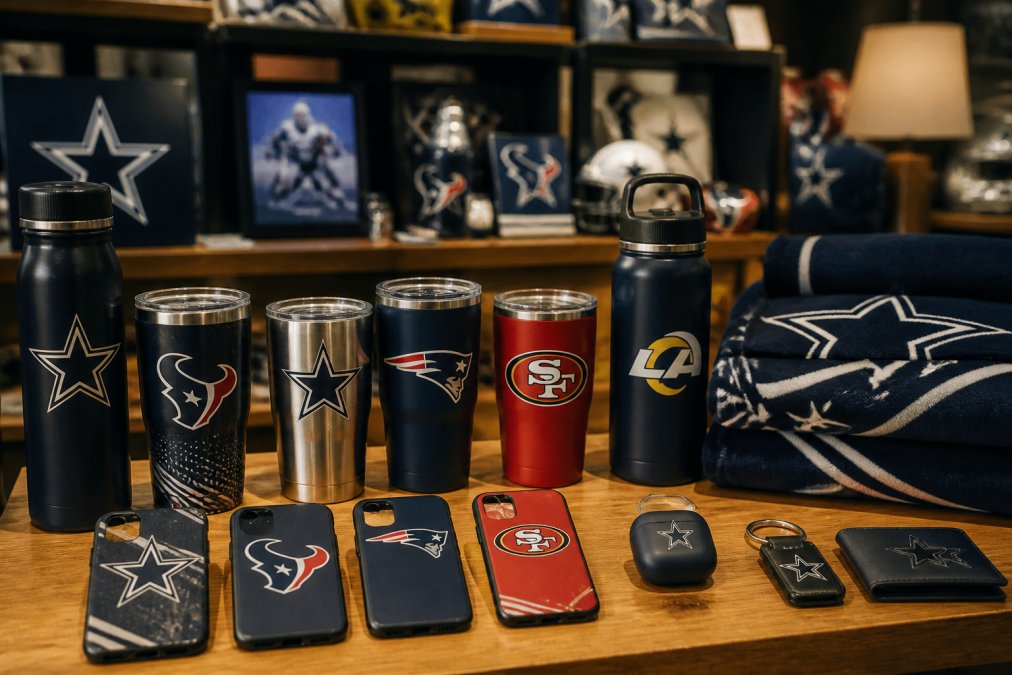
Official merchandise meets manufacturing standards with genuine materials that withstand repeated use.
Licensing Fees and Royalty Payments
Licensing fees are a major cost component. Manufacturers and retailers pay substantial upfront fees and ongoing royalties to teams and leagues for the right to use official intellectual property.
Manufacturers pay upfront fees plus a percentage of sales as royalties. Royalty rates vary by product type and sales volume, with popular teams commanding higher licensing costs.
This structure protects brand equity and ensures quality control. Leagues maintain approval authority over designs, manufacturing partners, and retail channels, preventing brand dilution and guaranteeing legitimate products.
Manufacturing and Production Costs
Official merchandise requires investment in proper facilities and quality control. Manufacturers must use approved suppliers, meet material specifications, and pass inspection before retail distribution.
Official production includes quality control checkpoints at multiple stages: fabric inspection, printing verification, assembly review, and packaging standards. Counterfeit operations skip these steps, enabling dramatic price undercutting.
Official manufacturers invest in technology for durable products. Precise screen printing, tight embroidery, and reinforced seams are engineered into the production process.
Supply Chain Logistics and International Tariffs
Official merchandise involves complex logistics: international shipping, customs clearance, tariffs, and warehousing all factor into final pricing.
Import tariffs are substantial and based on product category, origin, and value. These costs pass to retailers and consumers, though overseas production remains economical despite tariffs.
Shipping costs remain significant as merchandise travels through multiple distribution channels. Retailers maintain safety stock to ensure availability, tying up capital and storage space.
Inventory Management and Unsold Stock Risk
Retailers assume inventory risk. If a team underperforms or a player gets traded, merchandise becomes harder to sell. This risk gets baked into pricing.
Retailers forecast demand months in advance. Championship merchandise sells quickly, but underperforming teams' inventory sits in warehouses. Retailers compensate for this risk by pricing faster-moving items higher.
Championship gear and limited-edition items command premium prices due to shorter selling windows and higher demand. Retailers price accordingly while demand is high.
Player Trades and Roster Changes
Player trades reduce merchandise desirability in their old city. Retailers holding inventory face markdowns, and this unpredictability factors into pricing strategies.
Teams produce player-specific merchandise in smaller quantities to manage risk. Roster changes still create inventory challenges, with losses distributed across product lines through higher baseline pricing.
Authenticity Verification and Counterfeit Prevention
Official merchandise includes authenticity guarantees. Anti-counterfeiting measures like holographic tags and serialized labels add cost but protect consumers.
Combating counterfeits is expensive. Manufacturers work with customs agencies and law enforcement to identify fakes, investing in authentication technology reflected in official pricing.
Authorized retailers like SOK Sports provide products verified as authentic through legitimate supply chains, offering real value to fans seeking guaranteed legitimate gear.
Material Quality and Garment Construction
Official merchandise meets league-specified standards for material composition, construction, and durability, ensuring products represent the brand and withstand expected wear.
Fabric and Material Specifications
Licensed manufacturers source from approved suppliers meeting league requirements. Drinkware uses food-grade materials with thermal durability. Phone cases use impact-resistant materials with color stability. Display items resist fading and warping.
Counterfeit manufacturers skip specifications and source cheap materials. Counterfeit drinkware may use non-food-grade coatings; phone cases use brittle plastics that crack. These failures appear within weeks of use.
Printing and Embroidery Standards
Official merchandise requires precise application of logos, team names, and player information. For drinkware, official products use printing or coating methods that withstand repeated washing, dishwasher cycles, and thermal stress without fading or peeling.
Counterfeit operations use single-layer printing and adhesive-based logos that fail quickly. The printing on counterfeit drinkware often begins fading after a handful of washes. These failures occur because counterfeits prioritize initial appearance over durability.
Seam Construction and Reinforcement
For items like phone cases, official construction includes reinforced corners and edges where stress concentrates. For drinkware, official products feature sealed seams and reinforced attachment points for handles or lids.
A counterfeit phone case might have seams that separate within months. A counterfeit drinkware handle might detach after repeated use. These failures are not accidental; they result from manufacturing processes designed to minimize cost rather than maximize durability.
Quality Control Checkpoints
Official manufacturers implement multiple inspection stages: incoming material inspection, in-process quality checks during production, and final product inspection before packaging. These checkpoints verify that materials meet specifications, printing or embroidery is applied correctly, seams are properly constructed, and products function as designed. Defective items are rejected and reworked or discarded.
Counterfeit operations skip quality control entirely. Products move from production to packaging without inspection. This is how counterfeit merchandise reaches consumers with obvious defects, misaligned logos, color variations, loose seams, or non-functional components. The absence of quality control is a feature of counterfeit production, not a bug; it reduces costs.
Shrinkage and Shape Retention
For drinkware, materials are selected to resist warping from temperature changes. For phone cases and tech accessories, materials are chosen for dimensional stability.
A counterfeit drinkware item might warp when exposed to hot liquids. A counterfeit phone case might become loose or misshapen after months of use. These failures occur because manufacturers prioritize cost over material selection and processing standards.
Brand Equity and Exclusive Distribution
Official merchandise benefits from brand equity that took decades to build. Teams and leagues have invested heavily in building fan loyalty, winning championships, and creating cultural significance around their brands. That equity translates into pricing power.
Exclusive distribution agreements also affect pricing. Official merchandise is typically sold through authorized channels, team retail stores, licensed online retailers, and approved sporting goods retailers. This controlled distribution maintains brand positioning and prevents price wars that would erode margins across the entire ecosystem.
When a fan buys official merchandise, they're also buying access to exclusive items. Championship-commemorative gear, limited-edition releases, and player-specific products are available only through official channels. This exclusivity justifies premium pricing.
Market Demand and Fan Engagement Trends
Fan engagement drives demand for official merchandise. When a team wins, when a player has a breakout season, or when major games approach, merchandise demand spikes. Retailers capitalize on these moments with premium pricing.
The perceived value of official merchandise rises during high-engagement periods. A fan buying gear for an upcoming playoff game or to celebrate a championship is willing to pay more than someone buying casual team gear in the offseason. Retailers adjust pricing to reflect this demand elasticity.
Social media and sports culture have amplified merchandise demand. Wearing official gear has become a way for fans to signal identity and loyalty. This cultural significance supports higher pricing compared to generic gear.
The Perceived Value Psychology
While licensing fees, manufacturing costs, and supply chain logistics explain the tangible cost structure, official sports merchandise also commands a psychological premium that competitors rarely address. This premium exists because owning authentic gear triggers specific cognitive and social mechanisms that justify the higher price in consumers' minds, independent of the actual product quality.
The Authenticity Halo Effect
Fans perceive official merchandise as inherently more valuable simply because it carries the team's or league's explicit endorsement. This isn't irrational; it reflects a real difference in legitimacy. However, the psychological impact exceeds the material difference. A fan wearing an officially licensed phone case or drinkware bearing their team's logo experiences a stronger sense of connection to the organization than they would wearing a generic item with a similar design. This connection is the product being purchased, not just the physical object. The premium reflects what psychologists call the "authenticity halo", the tendency to assign higher value to items perceived as genuinely endorsed by the source they represent.
Identity Signaling and Community Belonging
Official merchandise serves as a visible signal of fan identity and team loyalty. Wearing or displaying official gear, whether a phone case, drinkware, or fan-cave display item, communicates group membership to other fans and the broader community. This signaling function has real social value. Fans who invest in official products report feeling more connected to the fan community and more confident expressing their allegiance publicly. The premium price reflects this identity benefit, which is especially pronounced during high-engagement periods like playoff seasons or championship runs.
The Scarcity and Exclusivity Premium
Official merchandise features limited-edition designs and championship-commemorative products available only through authorized channels. This exclusivity creates perceived scarcity, increasing perceived value and justifying premium pricing.
The Quality Assurance Premium
Beyond actual durability differences, fans assign psychological value to the assurance that official merchandise meets league standards. This assurance reduces purchase anxiety. A consumer buying an official product knows they are not taking a risk on counterfeit goods, substandard materials, or products that will deteriorate quickly. This peace of mind, the elimination of uncertainty, has measurable value in consumer decision-making. Fans are willing to pay more for the confidence that their purchase is legitimate and will perform as expected.
The Support Premium
Fans understand that official merchandise purchases support teams and players, creating psychological satisfaction generic alternatives cannot replicate. The premium reflects participation in supporting the organization.
How to Identify Legitimate Official Merchandise
Official merchandise includes clear branding indicating the licensed manufacturer and team or league, often with holographic or serialized authentication tags.
Check printing quality. Official products have sharp logos. Counterfeit items have fuzzy printing, misaligned logos, or spelling errors.
Purchase from authorized retailers like SOK Sports, which carries officially licensed merchandise. Authorized retailers ensure inventory authenticity; unauthorized sellers significantly increase counterfeit risk.
Official merchandise includes clear care instructions, material composition, and manufacturer information. Counterfeit items have vague, poorly printed, or missing labels.
Why Counterfeit Merchandise Seems Cheaper
Counterfeit products appear cheaper by skipping licensing fees, using cheaper materials, cutting manufacturing corners, and bypassing quality control.
Initial savings are temporary. Counterfeit merchandise deteriorates quickly, colors fade, prints crack within weeks. The bargain becomes expensive when replaced multiple times versus a single official purchase lasting years.
Buying counterfeit merchandise supports illegal operations and harms athletes and teams. Official merchandise revenue funds team operations and player salaries; counterfeit sales bypass this entirely.
The Value Proposition of Official Sports Merchandise
Official merchandise costs more because it delivers genuine value: manufactured to standards, backed by authenticity guarantees, and representing real connection to teams and players.
The price reflects the full cost of doing business legitimately, licensing, quality manufacturing, supply chain management, inventory risk, and brand protection. When fans understand these factors, the premium becomes less surprising and more justified.
For fans seeking to showcase team pride with products that will last, official merchandise from authorized retailers represents the best choice. The investment in quality, authenticity, and legitimate support for teams and players makes the higher price a worthwhile decision.