


How to Verify Officially Licensed Sports Apparel
Table of Contents
- Why Verifying Official Licensed Sports Apparel Matters
- How to Spot Fake Sports Merchandise: Visual Red Flags
- Checking for Official Team Licensing Holograms and Security Features
- Inspecting Stitching, Embroidery, and Patch Quality
- Verifying Serial Numbers and Alphanumeric Codes
- Confirming Manufacturer Tags, Wash Tags, and Labels
- Checking Fabric Quality and Material Composition
- Verifying the Retailer and Purchase Source
- Frequently Asked Questions
Last Updated: September 3, 2026
Counterfeit sports merchandise has become a significant problem for fans and collectors. Every year, millions of dollars are spent on fake apparel that mimics official team branding without proper licensing, quality standards, or manufacturer oversight. Understanding how to verify officially licensed sports apparel protects your investment, ensures you're supporting legitimate businesses, and guarantees you're getting authentic merchandise that represents your team pride correctly.
At SOK Sports, we offer an extensive collection of officially licensed sports merchandise for fans of MLB, NBA, NFL, NHL, and NCAA teams. This guide walks through the practical verification methods that separate genuine, officially licensed merchandise from counterfeit replicas.
Why Verifying Official Licensed Sports Apparel Matters
Purchasing counterfeit merchandise carries real consequences beyond wasting money. Fake apparel typically uses lower-quality materials, inferior stitching, and incorrect logos that fade or crack after minimal wear. More importantly, counterfeit purchases don't support the teams, leagues, and athletes you're trying to celebrate. Revenue from official merchandise funds team operations, player compensation, and community initiatives.
Counterfeit merchandise also creates legal and ethical complications. Intellectual property violations harm the leagues and teams that own these trademarks. When you buy fake merchandise, you're inadvertently participating in trademark fraud. Understanding verification methods protects you from these issues while ensuring your purchases genuinely support the sports you love.
The stakes are particularly high for collectors and superfans who invest in limited-edition championship gear or game-worn memorabilia. A single counterfeit item can undermine an entire collection's value and authenticity. For parents purchasing team-branded baby apparel for registry gifts, quality matters, fake merchandise often uses unsafe dyes and materials unsuitable for infant skin.
Official team licensing agreements with manufacturers like Nike, Fanatics, New Era, and other authorized partners establish strict quality control standards. These agreements ensure that every officially licensed product meets league specifications for material composition, stitching standards, logo placement, and overall construction. When you verify officially licensed sports apparel, you're confirming that these standards have been met.
How to Spot Fake Sports Merchandise: Visual Red Flags
The first defense against counterfeits is learning to identify obvious visual inconsistencies. Fake merchandise often displays telltale signs that experienced collectors spot immediately.
Logos that appear blurry, pixelated, or lack sharp definition indicate poor-quality printing or embroidery. Authentic merchandise features crisp, clean logos with consistent color saturation. The graphic resolution on genuine apparel matches professional printing standards, no rough edges, bleeding colors, or uneven application.
Patch placement varies significantly between authentic and counterfeit items. Fake merchandise often positions team logos, league patches, or manufacturer tags in slightly wrong locations compared to official standards. The distance from seams, sleeve placement, and chest positioning should match official specifications. A patch that sits half an inch too high or too low suggests counterfeit production.
Color inconsistencies are another common red flag. Official merchandise uses specific Pantone colors that match league and team standards. Counterfeit items frequently display colors that are slightly off, a shade too bright, too dull, or slightly different hue than the official version. Side-by-side comparison with known authentic items reveals these discrepancies immediately.
Text on tags, labels, and embroidery should be perfectly aligned and evenly spaced. Counterfeit merchandise often shows misaligned lettering, inconsistent spacing between letters, or text that appears crooked or uneven. Professional manufacturing maintains precise alignment across all text elements.
The overall weight and thickness of the apparel matters. Authentic sports merchandise uses specific fabric weights that feel substantial and durable. Counterfeit items often feel thin, flimsy, or unusually light compared to genuine versions. Running your hand across the fabric should reveal consistent texture and quality, no thin spots, rough areas, or inconsistent weaving.
Checking for Official Team Licensing Holograms and Security Features
Modern officially licensed sports apparel includes security features designed to prevent counterfeiting. These authentication elements have become increasingly sophisticated as manufacturers combat the counterfeit trade.
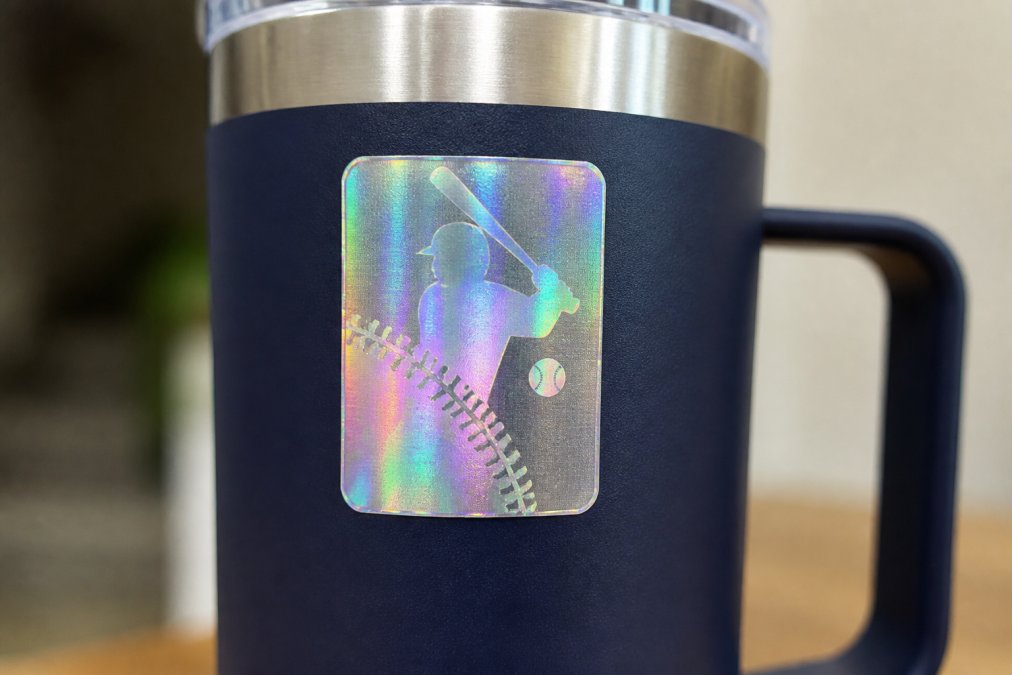
What Authentic Holograms Look Like
Authentic security holograms display specific visual characteristics that are extremely difficult to replicate. The hologram should shift colors when tilted under light, moving from one color to another as the viewing angle changes. This color-shifting effect (called iridescence) requires specialized manufacturing equipment that counterfeiters rarely possess.
The hologram surface should feel slightly raised or embossed compared to the surrounding label or tag. Running your fingernail gently across it should reveal a subtle three-dimensional texture. Counterfeit holograms often appear flat or printed on, lacking this tactile depth.
High-quality holograms contain micro-text or microscopic patterns visible only under magnification. These security elements are intentionally difficult to see with the naked eye but become apparent under a jeweler's loupe or smartphone magnification. Counterfeit versions rarely include these microscopic details, or they appear blurry and poorly rendered.
The hologram should include the official league logo, team branding, or manufacturer insignia integrated into the design. These elements should be crisp and clear, never pixelated or distorted. The hologram background typically features a specific pattern or texture that's consistent with official security standards.
Verifying Hologram Placement and Quality
Official holograms appear in consistent locations across merchandise from the same manufacturer and season. The hologram typically attaches to the main care tag, neck tag, or a dedicated security patch. Counterfeit merchandise sometimes places holograms in wrong locations or uses multiple different hologram styles on the same item, a clear sign of fake production.
Examine the hologram's attachment method. Authentic security holograms are typically heat-sealed or permanently bonded to tags and labels. They should not peel off easily or show signs of poor adhesion. Counterfeit holograms often use weak adhesives that allow them to lift at the edges or separate entirely.
The hologram's size and proportions should match official specifications. Counterfeit manufacturers often scale holograms incorrectly, making them too large, too small, or distorted compared to authentic versions. Comparing your item to official product photos or known authentic merchandise reveals these size discrepancies.
Lighting quality affects hologram verification. Examine holograms under bright, natural daylight or a high-quality LED light source. Poor lighting can mask defects in counterfeit holograms. The color-shifting effect should be obvious and dramatic under proper lighting, if you struggle to see the iridescence, the hologram may be counterfeit.
Inspecting Stitching, Embroidery, and Patch Quality
Stitching quality separates authentic merchandise from counterfeits more reliably than almost any other factor. Professional manufacturing maintains precise, consistent stitching standards that counterfeit operations struggle to replicate.
Authentic embroidery features even stitch length and consistent spacing throughout the design. Each stitch should sit perpendicular to the fabric surface, creating a neat, uniform appearance. Counterfeit embroidery often displays uneven stitch lengths, inconsistent spacing, or stitches that angle awkwardly across the fabric.
The thread color on authentic merchandise matches the design precisely. Counterfeit embroidery frequently uses thread colors that don't quite match, a slightly different shade or hue that becomes apparent in natural light. The thread should also be high-quality polyester or specialty embroidery thread, not cheap cotton that frays easily.
Examine the underside of embroidered areas. Authentic merchandise features clean, organized stitching on the back side with minimal loose threads. Counterfeit items often show messy backing with excessive loose threads, knots, or areas where the embroidery pattern is visible but poorly executed.
Patch attachment quality indicates manufacturing standards. Official patches are sewn with multiple rows of stitching for durability, typically using a box-stitch or similar reinforced pattern. The stitching should be tight, consistent, and follow the patch edges precisely. Counterfeit patches often show single-row stitching, loose tension, or stitching that wanders away from the patch edges.
The patch edges themselves matter. Authentic woven patches have clean, finished edges with no fraying or loose threads. Counterfeit patches frequently display rough, frayed edges or incomplete finishing. Running your finger along the patch edge should feel smooth and finished on authentic merchandise.
Heat-transfer logos should have no cracking, peeling, or separation from the fabric. The transfer should feel flexible and integrated into the fabric, not stiff or prone to cracking. Counterfeit heat transfers often peel at the edges or crack with minimal flexing.
Verifying Serial Numbers and Alphanumeric Codes
Many officially licensed products include unique alphanumeric codes that allow consumers to verify authenticity through manufacturer databases. These serial numbers track inventory, prevent counterfeiting, and provide proof of purchase.
Serial numbers typically appear on tags, labels, or dedicated hologram stickers. The format varies by manufacturer and league, but official serial numbers follow consistent patterns. Nike merchandise, for example, uses specific code formats that differ from Fanatics or New Era codes. Understanding the expected format for your item helps identify counterfeits that use random or incorrect code patterns.
The serial number should be printed clearly and legibly, not smudged, faded, or difficult to read. Counterfeit merchandise often displays poorly printed codes with ink bleeding, inconsistent darkness, or misaligned text. High-quality printing maintains consistent darkness and clarity across all characters.
Verify the serial number through the manufacturer's official website or authentication database. Most major manufacturers (Nike, Fanatics, New Era) provide online verification tools where consumers input the serial number to confirm authenticity. If the database doesn't recognize your code, the merchandise is likely counterfeit. However, older merchandise or items from secondary markets may not appear in current databases.
Check that the serial number format matches official specifications. Counterfeit manufacturers often use random numbers or incorrect formatting. For example, if official codes always contain specific letter-number combinations, a code that deviates from this pattern indicates counterfeiting.
The placement of the serial number should be consistent with official standards. Some manufacturers place codes on neck tags, others on care tags, and others on dedicated hologram stickers. Merchandise with serial numbers in unexpected locations may be counterfeit. Research the official placement standard for your specific item type.
Multiple serial numbers on the same item can indicate counterfeiting. Official merchandise typically uses one primary code per item. If your apparel displays multiple different codes in various locations, verify each one independently through manufacturer databases.
Confirming Manufacturer Tags, Wash Tags, and Labels
Manufacturer tags provide crucial authentication information. Official tags include specific details about fabric composition, care instructions, manufacturing location, and licensing information that counterfeit operations frequently get wrong.
The tag text should be perfectly aligned and evenly spaced. Authentic manufacturer tags use professional printing with consistent letter sizing and spacing. Counterfeit tags often display misaligned text, inconsistent letter sizes, or spacing problems that become obvious upon close inspection.
Fabric composition information must match official standards for that specific merchandise type. Official tags list exact fiber percentages, for example, "100% Polyester" or "60% Cotton, 40% Polyester." Counterfeit tags frequently show incorrect compositions or vague descriptions. Cross-reference the tag information with official product specifications to verify accuracy.
Care instructions should include proper washing, drying, and ironing guidance. Official tags provide detailed, accurate care instructions. Counterfeit tags often include generic or incorrect care guidance that doesn't match the actual fabric composition or product type.
The "Made in" location on the tag provides important verification information. Official merchandise is manufactured in authorized facilities in specific countries. Counterfeit merchandise often comes from unauthorized locations. Research where your specific item type is officially manufactured, if the tag shows a different country, the item may be counterfeit.
Licensing information on tags should include the official league logo, team name, and manufacturer name (Nike, Fanatics, New Era, etc.). Authentic tags clearly state the licensing agreement and official branding. Counterfeit tags frequently omit or misrepresent this information.
The tag attachment method matters. Official tags are securely sewn or heat-sealed to apparel. Counterfeit tags often use weak adhesives or poor stitching that allows tags to separate easily. Tags should not peel off or show signs of poor attachment.
Look for specific tag variations by season or year. Official merchandise from different seasons may feature slightly different tag designs, fonts, or layouts. Counterfeit manufacturers often use outdated tag designs or inconsistent variations. Comparing your item's tag to current official products reveals these discrepancies.
Checking Fabric Quality and Material Composition
The feel and weight of authentic sports apparel differs noticeably from counterfeit merchandise. Official manufacturers use specific fabric weights and material compositions that create a particular tactile experience.
Authentic sports apparel typically feels substantial and durable. Running your hand across genuine merchandise reveals consistent texture and quality. Counterfeit items often feel thin, flimsy, or unusually light. The fabric should not feel papery, stiff, or artificially crispy, these characteristics indicate low-quality counterfeit materials.
Material composition affects how the fabric performs. Authentic merchandise uses premium polyester blends, quality cotton, or specialty athletic materials designed for durability and comfort. Counterfeit merchandise frequently uses cheap, low-grade materials that feel uncomfortable against skin and deteriorate quickly with washing.
Check for consistent weave and texture across the entire item. Authentic apparel maintains uniform fabric quality throughout. Counterfeit merchandise often displays thin spots, rough areas, inconsistent weaving, or areas where the fabric feels different from surrounding sections.
The fabric should not show signs of pilling, fraying, or deterioration in new condition. Counterfeit merchandise frequently shows these defects immediately, even before wearing or washing. Authentic apparel resists pilling and maintains its appearance through multiple wash cycles.
Color fastness indicates fabric quality. Authentic merchandise uses high-quality dyes that resist fading. Counterfeit merchandise often uses cheap dyes that fade significantly after a single wash. If the apparel's color appears faded or uneven in new condition, the material quality is suspect.
The fabric should drape naturally and maintain its shape. Counterfeit materials often feel stiff or unnatural, failing to drape properly or maintain the intended silhouette. Authentic apparel drapes smoothly and maintains its shape through normal wear and washing.
Examine the fabric under bright light for inconsistencies. Authentic materials show consistent color and texture under magnification. Counterfeit fabrics often display color variations, uneven dyeing, or visible defects under close inspection.
Verifying the Retailer and Purchase Source
Where you purchase merchandise significantly impacts the likelihood of receiving counterfeit items. Official retailers and authorized dealers maintain quality control standards that protect consumers from fakes.
Authorized retailers include official team websites, major sporting goods chains, and licensed merchandise partners. These retailers verify their supply chain and maintain relationships with official manufacturers. Purchasing from authorized sources dramatically reduces counterfeit risk.
Secondary market purchases carry higher counterfeit risk. Online marketplaces, resale platforms, and individual sellers may unknowingly sell counterfeit merchandise. If purchasing through secondary markets, request detailed photos and verification information before completing transactions.
Check retailer credentials and licensing information. Official retailers display licensing agreements, manufacturer partnerships, and authentication guarantees prominently. Retailers that don't clearly state their official status or licensing may be selling counterfeit merchandise.
Examine seller reviews and ratings when purchasing from secondary markets. Established sellers with extensive positive feedback are generally more trustworthy than new sellers with minimal history. However, even established sellers can occasionally sell counterfeit merchandise unknowingly.
Request proof of authenticity when purchasing expensive or limited-edition items. Official retailers and reputable secondary market sellers should provide authentication documentation, serial number verification, or certificates of authenticity for high-value merchandise.
Be cautious of unusually low prices. Authentic merchandise, particularly limited-edition or championship gear, commands premium prices. If an item is priced significantly below market value, investigate the source carefully. Counterfeit merchandise often appears cheaper because it costs less to produce.
Check the retailer's return and refund policy. Official retailers and reputable dealers stand behind their merchandise with generous return policies. Sellers offering no returns or restrictive refund policies may be selling counterfeit items they know won't withstand scrutiny.
Verify the retailer's physical location and contact information. Legitimate retailers maintain verifiable business addresses and customer service contact details. Retailers operating through anonymous accounts or providing minimal contact information pose higher counterfeit risk.
Research the retailer's reputation through independent sources. Official team forums, collector communities, and sports fan groups discuss retailer reliability and counterfeit experiences. Checking these communities reveals which retailers consistently sell authentic merchandise and which have counterfeit problems.
Protecting yourself from counterfeit sports merchandise requires attention to detail and knowledge of what authentic items should look like. By examining holograms, stitching quality, serial numbers, tags, fabric composition, and retailer credibility, fans can confidently purchase officially licensed sports apparel that truly represents their team pride. SOK Sports specializes in providing verified, officially licensed merchandise across MLB, NBA, NFL, NHL, and NCAA teams, ensuring every purchase meets strict quality and authenticity standards. When you shop with verified retailers committed to authentic merchandise, you invest in quality gear that lasts, supports your favorite teams, and delivers the team pride experience fans deserve.
| Verification Method | What to Check | Red Flag Indicator |
|---|---|---|
| Holograms | Color-shifting, three-dimensional texture, micro-text | Flat appearance, no color shift, blurry details |
| Stitching | Even length, consistent spacing, clean backing | Uneven stitches, loose tension, messy backing |
| Serial Numbers | Clear printing, correct format, verifiable in database | Smudged printing, incorrect format, unrecognized codes |
| Tags | Aligned text, correct fabric composition, proper licensing | Misaligned text, vague composition, missing licensing |
| Fabric | Consistent weight, quality materials, proper drape | Thin feel, cheap materials, stiff appearance |
| Retailer | Official licensing, positive reviews, clear contact info | Anonymous accounts, no reviews, hidden location |
Frequently Asked Questions
How can I tell if sports merchandise is officially licensed?
Check for three key indicators: a holographic security label with the league logo, a manufacturer's tag with the licensed brand name, and a serial number or alphanumeric code. Authentic apparel also features clean, even stitching on all logos and patches, consistent fabric weight, and proper logo placement matching official imagery. Always verify the retailer is an authorized dealer of that brand.
What should I look for on a holographic sticker for sports gear?
Authentic holograms shift color and design when tilted at different angles, typically showing the league logo, team mark, or official partner branding. The hologram should be smooth, securely attached, and positioned consistently on all items from that manufacturer. Counterfeit holograms often appear flat, lack color-shifting properties, or are poorly adhered to the fabric.
How do I verify the authenticity of online sports gear retailers?
Visit the official league website (MLB, NBA, NFL, NHL, or NCAA) and check their list of authorized retailers and official partners. Look for secure checkout, clear return policies, and contact information. Authorized dealers display official partnership badges and offer merchandise with proper authentication features. Be cautious of retailers offering unusually steep discounts or lacking transparent inventory information.
Why is it important to buy officially licensed sports merchandise?
Official merchandise supports the league, teams, and players through legitimate revenue. Licensed products meet quality control standards for fabric, stitching, and durability, ensuring better longevity than counterfeits. Buying authentic apparel also protects you from fraud and ensures your purchase supports the sport and athletes you love.