


Sports Fan Cave Checklist: Why You Need One
Table of Contents
- Why a Sports Fan Cave Checklist Matters
- Sports Fan Cave Ideas: Essential Elements to Plan
- Sports Memorabilia Display Ideas for Your Collection
- Game Day Room Setup: Layout, Measurements, and Planning
- Sports-Themed Home Office: Blending Work and Team Pride
- The Complete Fan Cave Checklist: Step-by-Step Priorities
- Hosting, Accessibility, and Maintenance Considerations
- Conclusion
- Frequently Asked Questions
Last Updated: October 7, 2026
Why a Sports Fan Cave Checklist Matters
A sports fan cave checklist transforms a blank room into a personalized sports sanctuary.
The real benefit goes beyond decoration. A checklist forces fans to think through priorities before buying. Should the TV come first, or the seating? What size screen fits the room?
Most fans start by impulse-buying a single item, maybe a team rug or a neon sign. Then they buy more pieces that don't coordinate. Six months later, the room feels cluttered rather than curated.
The difference between a great fan cave and a mediocre one often comes down to planning. This guide walks through a practical sports fan cave checklist that eliminates guesswork.
Sports Fan Cave Ideas: Essential Elements to Plan
Before shopping, identify the core elements that define a fan cave. Not every space needs every item, but understanding the categories helps fans make intentional choices.
Centerpiece and Display Focus
Every great fan cave has a focal point. This is typically the television, but it could also be a wall displaying signed memorabilia or a collectibles shelf. The centerpiece anchors the room's layout and guides where other items go.
Fans should decide what story they want the room to tell. Is it about one team, or a collection across multiple teams? Is it a shrine to a specific era, like a championship season?
Display-focused fan caves prioritize wall space for team photos or championship memorabilia. These rooms feel like galleries. Viewing-focused caves prioritize seating comfort and screen quality. Both approaches work, the choice depends on what matters most to the fan.
Viewing Setup and Technology
The television is the heart of most fan caves. Size matters, but so does placement. A screen that's too small wastes the room's potential. One that's too large creates neck strain during long games.
The rule of thumb: sit at the distance fans will typically watch from, then measure to the TV. The screen height should align roughly with eye level when seated. This prevents uncomfortable tilting.
Beyond the TV, consider audio. A quality sound system transforms the experience. Game commentary, crowd noise, and replays all hit harder with good speakers.
Streaming devices and cable boxes should be organized behind the TV or in a nearby console. Cable management keeps the space looking intentional rather than chaotic.
Sports Memorabilia Display Ideas for Your Collection
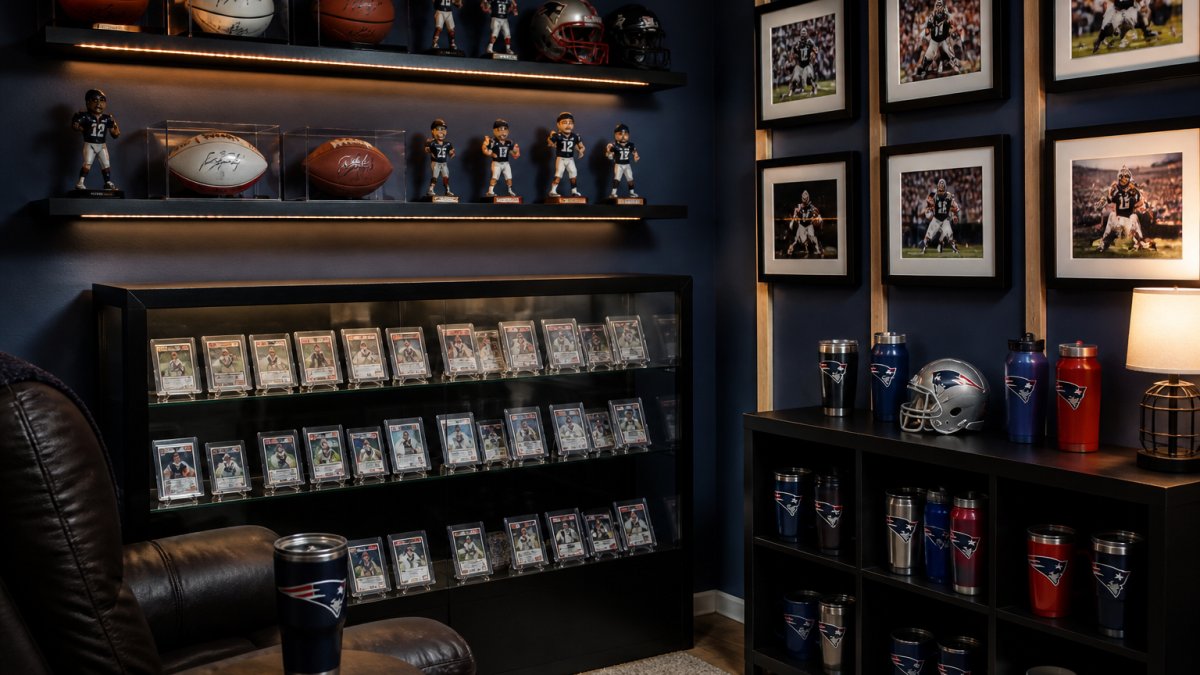
Displaying a collection well is a preservation project as much as a decorating one. Sunlight, dust, humidity, and unstable shelves damage items that took years to gather. The goal is a display that looks curated and keeps what is on it in good condition.
Choose the Right Display Surface
Match the surface to the item. Small pieces such as autographed balls, trading cards, and figurines sit well on floating shelves or a shallow bookcase. Larger items, including framed photos and signed prints, need wall space with a stud behind the mount. Glass-front cases protect against dust and curious hands, which matters in a room that hosts guests.
Before hanging anything, find the studs. A framed piece that falls off the wall can damage the frame, the item, and whatever is below it. For heavy cases, use a French cleat or a shelf bracket rated well above the item's weight rather than a single hook.
Control Light and Dust
Direct sunlight fades inks, fabrics, and photos over time (Limiting Light Damage). Keep displays on interior walls away from windows, or use UV-filtering glass and room-darkening shades. Even indirect daylight adds up over years.
Dust is the quieter problem. Open shelves collect it, and cleaning around fragile items risks damage. Glass-front cases and closed cabinets cut dust dramatically. For open displays, a soft brush or a can of compressed air used gently at a distance works better than a cloth that can snag edges.
Group Items So the Display Tells a Story
A wall of unrelated items reads as clutter. Group by team, by era, or by type. One shelf for a championship season, another for a favorite player, and a third for a specific sport creates visual rhythm and gives guests something to ask about.
Leave empty space. A shelf packed edge to edge looks like storage; a shelf with breathing room looks like a display. Rotating items seasonally keeps the room fresh and gives stored pieces a turn in the light.
Protect and Store the Rest
Not everything can be on display at once. Store the rest in acid-free boxes or archival sleeves, away from basements that flood and attics that swing in temperature. A closet on an interior wall is usually a better home than a garage shelf.
Label storage boxes by team or category so rotating the display is quick. Keep a simple inventory list, especially for signed or limited items, in case insurance ever needs it.
Add Display-Friendly Fan Cave Items
The store's display and fan-cave category covers the pieces that make a collection look intentional: shelves, cases, wall-mounted frames, and team-themed accents that tie the display to the room. Team drinkware on a nearby shelf or a phone case on a charging stand can carry the theme without competing with the memorabilia for attention.
Game Day Room Setup: Layout, Measurements, and Planning
A functional fan cave requires intentional layout planning. The best setup depends on room dimensions, furniture size, and traffic flow.
Measuring Your Space and Creating a Layout
Start with a floor plan. Measure the room's length, width, and height. Note where doors and windows are located. This simple step prevents buying furniture that doesn't fit.
Next, measure the wall where the TV will hang. Most fans want the screen at eye level when seated. For a typical couch 8-10 feet away, a 55-65 inch screen works well.
Mark out seating areas. The primary seating should face the TV with minimal neck strain. Secondary seating can be angled. Leave pathways to doors and light switches clear.
Vertical space matters too. Tall shelving units or wall-mounted displays use height without consuming floor space. This keeps the room open and navigable during gatherings.
Budget Tiers and Priority Shopping
Fan caves don't require unlimited spending. Smart prioritization delivers results at any budget level.
Foundation tier (start here): Comfortable seating, a quality TV, and basic cable management. This tier creates a functional viewing space.
Comfort tier (add next): Upgrade seating with recliners or sectionals. Add sound equipment. Introduce team colors through rugs and throw pillows. This tier transforms the space from functional to comfortable.
Personal touches tier (final layer): Display memorabilia, add team signage, frame jerseys, and introduce collectibles. This tier makes the space feel curated and personal.
Fans don't need to spend all at once. Spreading purchases across months allows budgets to breathe. Start with essentials, then layer in personal touches as funds allow.
Sports-Themed Home Office: Blending Work and Team Pride
Remote workers can bring team pride into their workspace. A sports-themed home office balances professionalism with personality.
Team colors on an accent wall work well without overwhelming the space. A desk mat with team logos adds subtle branding. Small collectibles on a shelf nearby keep the focus on work while maintaining the team connection.
Drinkware matters too. A team-branded mug or tumbler makes morning coffee feel like game day. SOK Sports offers officially licensed drinkware that works in any home office setting.
Avoid clutter. A home office differs from a fan cave, it needs to remain work-focused. One or two team items per surface is the right balance.
The Complete Fan Cave Checklist: Step-by-Step Priorities
A structured checklist removes decision fatigue. This framework applies to any budget or space size.
Phase 1: Foundation Items
These items make the space functional:
- Measure the room and create a floor plan
- Select and mount the TV (or identify the focal point)
- Arrange primary seating to face the focal point
- Set up cable management and organize devices
- Add basic lighting (overhead or lamps)
- Choose one accent color and apply it to one wall or through a rug
This phase typically takes one weekend. The space becomes usable immediately, even if it's not finished.
Phase 2: Comfort and Atmosphere
These items elevate the experience:
- Upgrade seating comfort (add cushions, recliners, or a sectional)
- Install sound equipment (soundbar or speakers)
- Add team colors through throw pillows, blankets, and rugs
- Hang team signage or posters
- Install accent lighting (LED strips, lamps)
- Add window treatments for better light control
This phase builds over weeks or months. Each addition improves comfort and atmosphere.
Phase 3: Personal Touches and Collectibles
These items make the space uniquely personal:
- Display signed memorabilia
- Organize collectibles on shelves or in cases
- Add team-themed decor items (clocks, wall art, figurines)
- Create a small bar or beverage station with team drinkware
- Add seating for additional guests (side tables, bar stools)
- Fine-tune lighting and adjust layout based on how the space is used
This phase reflects the fan's personality and collection. It's ongoing, fans add items over years.
Hosting, Accessibility, and Maintenance Considerations
A fan cave that hosts guests needs thoughtful planning. Accessibility ensures everyone can enjoy the space comfortably.
Seating should accommodate different body types and mobility levels. Chairs with arms help guests stand up. Recliners work for some people. Leaving clear pathways prevents tripping hazards.
Temperature control matters during long events. A fan or portable air conditioning unit keeps the space comfortable. Adequate ventilation prevents stuffiness when multiple people gather.
Maintenance keeps the space looking good. Dust collectibles regularly. Clean the TV screen with appropriate materials. Wipe down surfaces to prevent buildup.
For valuable items, consider climate control. Extreme temperature swings and humidity damage collectibles over time. A dehumidifier in basements prevents moisture damage to both items and furniture.
Conclusion
Building a sports fan cave with a structured checklist transforms how fans experience game day. The process starts with measuring, prioritizing, and planning phases. Each phase builds on the last, creating a space that reflects personal passion while remaining functional and comfortable.
A well-planned fan cave becomes a gathering space for friends and family. It's a place where fans celebrate wins, process losses, and connect with their teams. The checklist ensures every dollar spent and every item purchased serves this purpose. Whether the space is a basement corner or a dedicated room, intentional planning makes all the difference in creating a space fans actually want to spend time in.
Frequently Asked Questions
What are the must-have items for a sports fan cave?
A solid foundation includes comfortable seating, a quality television or screen for viewing games, team signage and wall art, a centerpiece (like a framed jersey or signed memorabilia), proper lighting to reduce glare, and storage for your collection. Add drinkware, phone cases, and tech accessories that match your team colors. The exact must-haves depend on your budget and available space, so use a checklist to prioritize what matters most to you.
How do you plan a sports fan cave to avoid wasting money?
Start with a checklist that prioritizes viewing comfort and seating over decorative items. Measure your space first to determine furniture sizes and screen dimensions. Divide purchases into phases: foundation items first (seating, screen, lighting), then comfort upgrades (rugs, throw pillows), then collectibles and personal touches. This approach prevents impulse buying and ensures your space functions well before adding premium pieces.
Why is a sports fan cave checklist better than just decorating without a plan?
A checklist prevents overspending, ensures you don't forget essential items like proper seating or lighting, helps you measure your space correctly before buying furniture, and gives you a roadmap for building your space in phases. It also helps you think through hosting needs, accessibility, and how to display memorabilia safely. Without a plan, fans often end up with cluttered, uncomfortable spaces that don't work for game day.
Can you have a sports-themed home office that also works as a fan cave?
Yes. Use team-branded desk accessories, drinkware, phone cases, and wall art that complement your professional setup. Keep team signage minimal and organized so your workspace remains functional. A small display shelf for one or two collectibles works better than filling walls. This approach lets you showcase team pride during work-from-home hours while maintaining a professional environment for video calls.