


Best Ways to Display Sports Memorabilia
Table of Contents
- Why Proper Display Matters for Your Collection
- Choosing the Right Display Case or Wall Mount
- Best Lighting for Display Cases
- How to Organize Sports Collectibles
- Preserving Autographs and Protecting from UV Damage
- Fan Cave Decor Ideas to Showcase Your Collection
- Climate Control and Long-Term Storage Strategies
- Displaying Sports Memorabilia Without Clutter
- Frequently Asked Questions
Last Updated: September 27, 2026
Why Proper Display Matters for Your Collection
Sports memorabilia represents a tangible connection to favorite teams and memorable moments, and learning how to display sports memorabilia properly transforms items from storage into a curated showcase. Proper display transforms items from storage into a curated showcase that balances aesthetics with preservation, keeping collectibles vibrant and protected for years to come.
Proper display prevents physical deterioration, autographs fade under sunlight, trading cards warp in humidity, and items develop damage when stored improperly. A thoughtful setup addresses preservation while creating a focal point that enhances any room.
Choosing the Right Display Case or Wall Mount
Display Cabinet Options
A display cabinet protects items from dust, humidity, and damage while allowing visibility from all angles.
Glass display cabinets with UV-safe glazing prevent ultraviolet light from degrading autographs and colored materials. Acrylic cases offer a lightweight alternative, though glass is superior for valuable collections.
Standard shelving depths of 12-16 inches accommodate most memorabilia; deeper cabinets (18-24 inches) work better for three-dimensional items. Adjustable shelving provides flexibility as collections grow.
Museum-grade display cases use acid-free materials and climate-controlled interiors for maximum protection of high-value items.
Wall-Mounted Display Ideas
Wall-mounted displays maximize space while creating focal points in fan caves and home offices where floor space is limited.
Shadow boxes frame memorabilia against backing material, creating depth and protecting contents from air exposure while allowing full visibility.
Floating shelves offer open display; spacing items evenly prevents clutter and works best for high-quality pieces that don't require enclosed protection.
Gallery walls combine frames, shelves, and mounts to create unified compositions. Grouping by team, era, or player creates visual coherence and striking aesthetic impact.
Best Lighting for Display Cases
LED Lighting for Collectible Preservation
LED lighting is the standard for display cases, it produces minimal heat and emits no ultraviolet radiation, preventing autograph fading and color degradation.
Warm white LEDs (2700-3000K) create inviting atmosphere; cool white LEDs (4000-5000K) provide brighter illumination for detailed inspection.
Dimmable LED strips offer flexibility; adjusting intensity in evening hours creates ambiance while protecting items from excessive light exposure.
Position LED fixtures 6-12 inches from memorabilia to balance visibility with preservation and prevent heat-related degradation.
Positioning Lights to Minimize Glare
Mount lights along the top interior of cabinets to cast downward illumination and minimize reflection on glass surfaces.
Position lights above each shelf to illuminate the tier below, ensuring adequate light without shadows.
Backlighting creates silhouettes and highlights dimensional depth; combining it with front illumination creates museum-quality displays.
How to Organize Sports Collectibles
Arrangement Principles for Visual Balance
Focal points anchor the composition, place valuable or striking items at eye level and centered to establish hierarchy.
Symmetrical arrangements create formal aesthetics; asymmetrical arrangements feel more dynamic. Choose based on personal preference and space.
Leave 2-4 inches between items to create a curated appearance and prevent clutter.
Alternate contrasting colors to create visual rhythm and prevent flat arrangements.
Grouping by Team, Era, or Type
Organize by team to create cohesive tributes; by era to tell historical stories; or by item type for visual consistency.
Preserving Autographs and Protecting from UV Damage
Autographed memorabilia requires specialized care, UV protection is the most important preservation strategy.
UV-blocking glass blocks 99% of harmful rays while maintaining visibility. Acrylic alternatives offer similar protection at lower cost.
Archival-quality framing uses acid-free mats and backing materials. Standard framing materials contain lignin that yellows and deteriorates; archival materials preserve condition indefinitely.
LEDs produce no ultraviolet radiation and are optimal for autographed items. Avoid incandescent and fluorescent bulbs, which emit UV radiation.
Store inactive items in cool, dark, climate-controlled environments. Avoid basements and attics, which experience humidity fluctuations that accelerate fading.
Fan Cave Decor Ideas to Showcase Your Collection
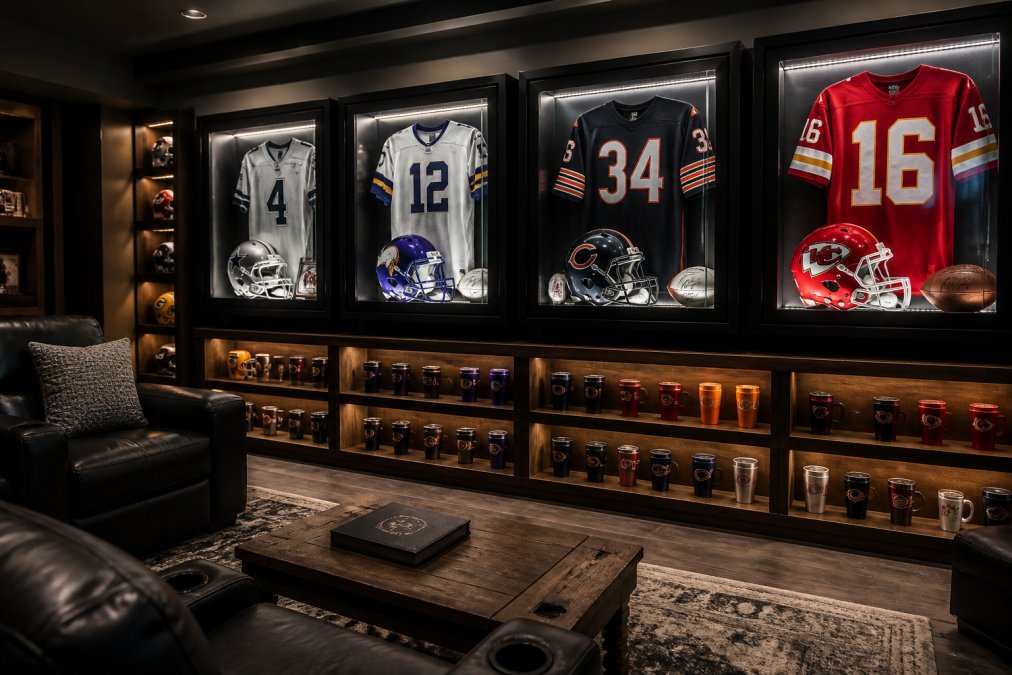
A dedicated fan cave transforms memorabilia display into an immersive experience. This space celebrates team pride while creating a comfortable retreat for watching games and entertaining fellow fans.
Creating a Gallery Wall for Memorabilia
Map the wall layout on paper before mounting to ensure balanced proportions and professional results.
Vary frame widths and alternate between wood and metal finishes. Maintain consistent color tone to tie the composition together.
Maintain 2-3 inches between frames and shelves for a cohesive gallery.
Incorporate different memorabilia types to create visual variety and showcase the collection's breadth.
Integrating Drinkware and Desk Accessories
Team-branded drinkware and desk accessories extend the fan cave aesthetic while serving practical purposes.
Display drinkware on dedicated shelves, grouping by color or team to create visual impact.
Desk accessories add personality to workspace areas. Coordinate them with memorabilia colors and themes for cohesion.
Position drinkware and accessories on secondary shelves to complement rather than distract from primary displays.
Climate Control and Long-Term Storage Strategies
Temperature and humidity fluctuations cause irreversible damage to memorabilia. Maintaining stable conditions is essential for long-term preservation.
Temperature and Humidity Targets
Maintain temperatures between 65-75°F with relative humidity of 40-50%. Consistency matters more than absolute temperature, avoid seasonal swings exceeding 10°F per week.
Humidity above 60% promotes mold and causes ink to bleed; below 30% causes paper to become brittle. Target 40-50% humidity.
Monitoring and Control Equipment
A hygrometer (humidity meter) is essential for any serious collector. Digital hygrometers with memory functions track high and low readings over time, revealing patterns that indicate environmental problems. Place units in multiple locations within display areas to identify hot spots or problem zones.
Dehumidifiers remove excess moisture in enclosed spaces. For display cabinets, small silica gel canisters or rechargeable desiccant packs work effectively without requiring electrical outlets. Replace or recharge these monthly during humid seasons. For larger fan caves or dedicated rooms, standalone dehumidifiers maintain ambient humidity within target ranges.
Humidifiers address the opposite problem in arid climates or heated indoor spaces during winter. Ultrasonic or evaporative models maintain humidity without introducing mineral deposits that damage memorabilia. Avoid steam humidifiers, which can create localized moisture spikes.
Thermostats and programmable climate systems prevent temperature swings. Keeping display areas on the same HVAC zone as living spaces (rather than isolated attics or basements) provides more stable conditions.
Air Quality and Dust Management
Dust accumulation accelerates deterioration and obscures visibility. Dust particles contain sulfur compounds and other pollutants that chemically degrade materials over time. Sealed display cases with gaskets prevent dust infiltration entirely. For open shelving, HEPA air purifiers positioned near displays reduce airborne particles.
Light Exposure Beyond UV
Ultraviolet radiation receives attention, but visible light also causes fading over extended periods. High-intensity illumination accelerates color loss in autographs, trading cards, and fabric items. Limiting total light hours extends item lifespan significantly.
Seasonal Adjustments
Humidity and temperature vary seasonally. Winter heating dries indoor air; summer humidity increases moisture. Adjust dehumidifier and humidifier settings seasonally to maintain target ranges. Collectors in humid climates (Southeast, Gulf Coast) require year-round dehumidification; those in arid regions (Southwest, Mountain West) may need humidification only during winter heating season.
Displaying Sports Memorabilia Without Clutter
Restraint separates curated collections from cluttered accumulations. Strategic selection of display pieces creates visual impact while maintaining aesthetic appeal and protecting items from overcrowding damage.
Rotating Displays and Preservation
Rotating displays prevents visual fatigue and extends item lifespan. Rather than displaying the entire collection simultaneously, feature rotating selections on a seasonal or monthly basis. This approach keeps the fan cave fresh while ensuring all items receive appropriate protection during inactive periods.
Establishing Display Hierarchies
Display hierarchies ensure prominent placement for the most valuable or meaningful items. Primary memorabilia occupies prime real estate, eye-level positions in the most visible locations. Secondary pieces occupy supporting roles on upper or lower shelves. This visual hierarchy guides viewers' attention and prevents all items from competing equally for focus.
Documentation and Insurance Considerations
High-value collections require documentation for insurance purposes and theft recovery. Create a detailed inventory with photographs, descriptions, acquisition dates, and estimated values. Store this documentation separately from the collection itself, a cloud-based spreadsheet or external hard drive ensures access even if the physical collection is damaged or stolen.
Security Measures for Valuable Collections
Displaying memorabilia creates visibility that attracts both admiration and potential theft. For collections with significant monetary or sentimental value, consider security measures proportional to the collection's worth.
Consistent Organization Systems
Consistent organization systems prevent visual chaos and make inventory management easier. Whether grouping by team, era, or item type, maintaining clear organizational logic helps viewers understand the collection's structure. This coherence elevates the display from personal accumulation to intentional curation.
Frequently Asked Questions
What's the best way to display sports memorabilia to keep it safe?
Use archival-quality display cases or wall mounts with UV-safe glazing to protect your collection from fading and environmental damage. Ensure the display location has stable temperature and humidity levels, away from direct sunlight. For autographed items, use acid-free materials and museum-grade mounting hardware. Proper lighting with LED fixtures positioned to minimize glare helps preserve colors while creating visual appeal.
How do I organize sports collectibles to avoid a cluttered look?
Group items by team, era, or type to create visual coherence. Leave adequate spacing between pieces rather than crowding them together. Establish a focal point, a centerpiece item that draws the eye first. Use shelving solutions that match your room's aesthetic, and vary the heights and depths of displayed items. This spatial planning approach makes even large collections look curated rather than cluttered.
What lighting techniques work best for displaying collectibles?
LED lighting is ideal because it produces minimal heat and UV radiation, protecting your memorabilia from degradation. Position lights at a 45-degree angle to reduce glare on display cases. Use warm white bulbs (2700K-3000K) for a welcoming atmosphere while highlighting colors accurately. Avoid placing lights directly above items, which can create harsh shadows. Dimmable fixtures give you control over ambient lighting throughout the day.
Should I use a display case or wall mount for my memorabilia?
Display cabinets offer superior protection with enclosed, dust-free environments and better climate control for valuable autographed items. Wall mounts work well for framed pieces and items you want to showcase prominently. Consider your collection's value and fragility, collector-grade pieces benefit from cases with UV-safe glazing, while less delicate items work fine on shelves or wall displays. A combination of both approaches often works best for diverse collections.