


Best Sports Apparel Return Policies: 2026 Guide
Table of Contents
- Why Return Policies Matter for Online Fan Gear
- How We Compared the Best Sports Apparel Return Policies
- Restocking Fees and Return Shipping Costs Compared
- Return Policy Exceptions for Personalized Items
-
How to Return Online Fan Gear: A Step-by-Step Guide
- Step 1: Check the Policy
- Step 2: Prepare Your Items
- Step 3: Process the Return
- Step 4: Document Everything Before the Package Leaves Your Hands
- Step 5: Track the Return and Escalate Delays
- The Environmental Cost of Returns: What Most Guides Ignore
- How to Reduce Return Waste Without Keeping Items You Do Not Want
- When Returning Is the Wrong Choice
- The Documentation Habit as a Sustainability Tool
- What to Look For: A Decision Checklist for Fan Gear
- Final Take: Shop Smart and Know Your Rights
- Frequently Asked Questions
Last Updated: September 7, 2026
Sports apparel return policies are the difference between buying fan gear with confidence and gambling on a purchase that might not work out. A return policy is the formal set of rules a retailer follows when a customer sends back an item, covering time limits, condition requirements, and refund methods. SOK Sports, which carries officially licensed merchandise for MLB, NBA, NFL, NHL, and NCAA teams, sees daily questions about what happens when a gift misses the mark. This guide breaks down the best sports apparel return policies so fans know exactly what to expect before checkout.
Most shoppers assume returns are simple: send it back, get money, move on. The reality involves return windows, restocking fees, and condition rules that vary widely between sellers. Below, we'll show you exactly how to evaluate any policy, what terms deserve scrutiny, and how to handle a return without losing money or patience.
Why Return Policies Matter for Online Fan Gear
Online apparel purchases carry inherent risk because sizing varies dramatically between brands and manufacturers. A medium from one maker can fit completely differently than a medium from another, which makes flexible return policies essential for anyone buying team gear sight unseen.
The stakes go beyond fit. Fan gear is frequently purchased as gifts, and the recipient may want a different player, size, or style. Without a clear path to exchange or return, a well-intentioned gift becomes an obligation to keep something unwanted. Retailers understand this tension, which is why customer-friendly policies have become a competitive advantage in the sports merchandise space.
Return policies also reflect broader operational priorities. Sellers with efficient reverse logistics processes tend to offer more generous terms because handling returns costs them less. A retailer's willingness to absorb return shipping costs or waive restocking fees signals confidence in product quality and commitment to customer satisfaction.
How We Compared the Best Sports Apparel Return Policies
Our Evaluation Criteria
Comparing return policies requires looking past the headline promise of "easy returns" to the fine print that governs actual outcomes. Our team evaluated policies across five core dimensions that determine how a return experience actually feels.
The evaluation framework covers return window duration, condition requirements, who pays shipping, refund speed and method, and how exceptions for personalized items are handled. Each factor carries weight because a policy is only as good as its weakest provision. A generous return window matters little if the retailer charges a restocking fee that eats into the refund.
Typical Sports Merchandise Return Window Duration
The sports merchandise return window duration most commonly falls between 30 and 90 days from the delivery date, with 30 days serving as the industry baseline (the FTC). Some retailers stretch their return windows during holiday seasons or for loyalty program members, but shoppers should confirm the window starts at delivery, not at purchase.
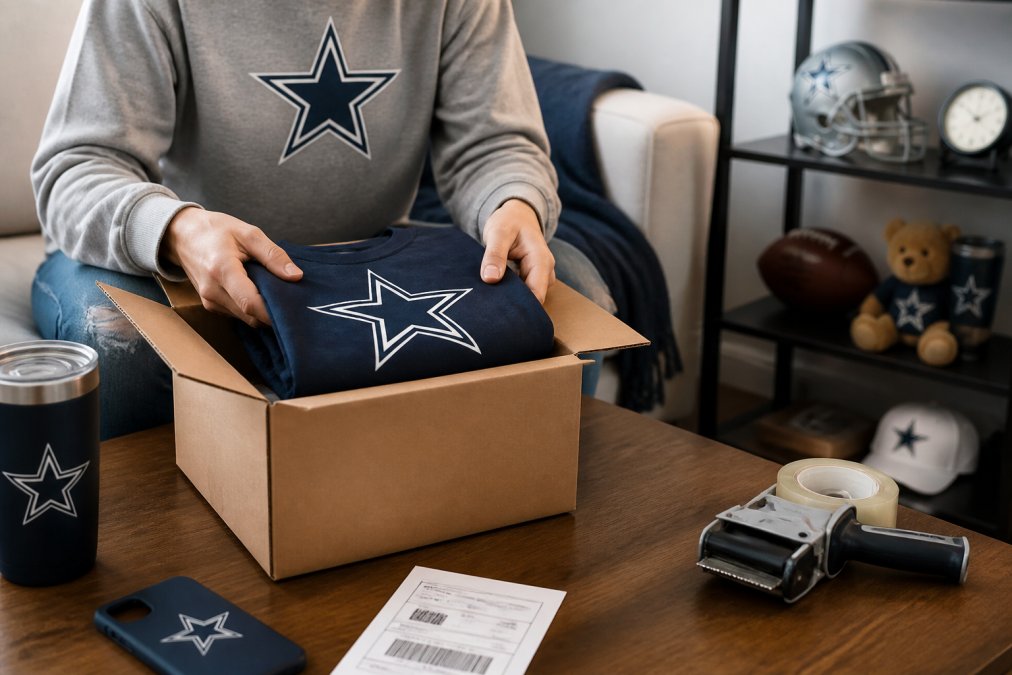
Understanding when the clock starts matters for practical planning. Most sellers require items to be postmarked within the window, meaning the package must enter the shipping system by the deadline rather than arrive at the warehouse by then. Buyers who wait until the last day and choose slow shipping can miss the cutoff through no fault of their own.
Restocking Fees and Return Shipping Costs Compared
Restocking fees and return shipping costs represent the hidden expenses that separate consumer-friendly policies from those that discourage returns. A restocking fee is a percentage deducted from the refund to cover the seller's cost of processing and reshelving the returned item.
Structures vary meaningfully across the industry. Some retailers charge a flat restocking fee on all returns, while others waive it entirely for defective merchandise or exchanges. Return shipping costs follow a similar pattern: some sellers provide prepaid shipping labels, while others deduct a label fee from the refund or require the buyer to arrange and pay for their own shipment.
A common approach among fan gear retailers is to offer free returns for exchanges but charge for straightforward refunds. This structure encourages customers to swap sizes rather than abandon the purchase, which benefits both parties. Shoppers should always verify whether the return shipping costs are deducted from the refund or billed separately, since this affects the final amount received.
Return Policy Exceptions for Personalized Items
Return policy exceptions for personalized items represent the most common source of confusion and disappointment in sports merchandise returns. Customized items, including engraved drinkware or customized phone cases, typically fall under a final sale designation because the item holds no resale value to the retailer.
Most sellers treat personalized products differently from standard inventory. Once a name and number are applied, the item cannot be returned for a refund unless it arrives defective or the customization itself contains an error. This exception exists because the retailer cannot restock a one-of-a-kind item that only appeals to the original buyer.
Shoppers ordering customized fan gear should double-check the spelling of names and selections before submitting, since errors made by the buyer generally are not covered by quality guarantees. Retailers typically allow returns for defects in the customization work itself, but proving the mistake requires clear photos and prompt communication. Understanding these personalized item exceptions before ordering prevents disappointment later.
How to Return Online Fan Gear: A Step-by-Step Guide
The process of returning online fan gear follows a predictable sequence that becomes straightforward once the policy is understood. Most retailers now offer automated returns through a return portal that generates labels and tracks the shipment from initiation to refund.
Step 1: Check the Policy
Review the specific policy for the item being returned, paying attention to the return window, condition requirements, and whether the item falls under a personalized exception. Confirm the deadline based on the delivery date and check whether the seller requires original packaging and tags attached.
Step 2: Prepare Your Items
Ensure the merchandise is unworn, unwashed, and in original condition with all tags attached. Repack the item in its original packaging when possible, and include the packing slip or proof of purchase. Items returned without proper documentation risk delayed processing or rejection.
Step 3: Process the Return
Initiate the return through the retailer's return portal, selecting the reason for the return and whether an exchange or refund is preferred. Print the prepaid shipping label if one is offered, or arrange shipping per the policy terms. Drop the package at the carrier location and retain the tracking number until the refund is confirmed.
Step 4: Document Everything Before the Package Leaves Your Hands
This step is the difference between a smooth refund and a prolonged dispute. Most return problems are not caused by malicious buyers or sellers, they are caused by missing evidence. Build a documentation file for every return, even small ones:
- Photograph the item from multiple angles, showing tags attached and any visible condition issues.
- Photograph the packaging before sealing, including the packing slip if one is included.
- Save the return authorization confirmation email or screenshot the portal confirmation page.
- Keep the carrier receipt with the tracking number until the refund posts to your account.
Step 5: Track the Return and Escalate Delays
After the package is in transit, monitor the tracking number until the carrier confirms delivery. Most retailers process refunds within 5 to 10 business days of the item arriving at their warehouse (consumer.ftc.gov). If the refund does not post within that window, contact customer service with the tracking number and the delivery confirmation in hand. Retailers resolve these cases quickly when the buyer provides concrete evidence of delivery.
The Environmental Cost of Returns: What Most Guides Ignore
Every return has an environmental footprint that most return-policy guides never mention. Reverse logistics, the process of shipping an item back to a warehouse, inspecting it, repackaging it, and returning it to inventory, consumes fuel, packaging materials, and labor. Industry analyses consistently find that a meaningful share of returned apparel cannot be resold as new, and items that fail inspection may be donated, discounted, or discarded (peer-reviewed research).
For sports merchandise specifically, the environmental cost is amplified by the geography of the supply chain. A fan in one region ordering from a warehouse in another region creates a cross-country round trip for a single item. Multiply that by millions of returns annually, and the carbon footprint becomes substantial.
How to Reduce Return Waste Without Keeping Items You Do Not Want
Consumers who want to minimize the environmental impact of returns have several practical options:
- Consolidate orders, Place one order rather than multiple small orders to reduce the number of shipments and potential return trips.
- Use the retailer's preferred return method, Retailers often offer a drop-off option that consolidates multiple returns into a single pallet shipment, which is more efficient than individual parcel pickups.
- Choose exchanges over refunds when possible, An exchange keeps the item in the sales cycle and avoids the restocking and potential disposal that follows a refund.
- Measure twice before ordering, Consult the retailer's size chart and measure a comparable item at home before purchasing. This single habit prevents the most common return trigger: incorrect sizing.
When Returning Is the Wrong Choice
For low-cost items where the return shipping fee would consume most of the refund, the environmentally responsible choice may be to keep the item, donate it locally, or gift it to another fan. An item where the return shipping fee would consume most of the refund creates a negative-value return: the buyer loses money, the retailer loses money on processing, and the environment bears the shipping emissions for no net benefit. Local donation through a community group or secondhand marketplace keeps the item in use without the round trip.
The Documentation Habit as a Sustainability Tool
Thorough documentation does more than protect the buyer, it reduces waste across the entire return system. When a return arrives with clear photos and accurate condition descriptions, the retailer's inspection team can process it faster and make better resale decisions. Items that arrive with ambiguous condition evidence are more likely to be discarded rather than restocked, because the retailer cannot confidently resell an item whose condition is in question. Clear documentation therefore keeps more returned items in the resale stream and out of the waste bin.
What to Look For: A Decision Checklist for Fan Gear
Evaluating a return policy before purchase prevents headaches after the fact. The checklist below summarizes the key provisions to examine when shopping for fan gear online.
| Policy Feature | What to Check | Why It Matters |
|---|---|---|
| Return window | Length and start date | Determines how long you have to decide |
| Condition rules | Tags, original packaging | Affects whether the return is accepted |
| Shipping costs | Who pays and how | Impacts the final refund amount |
| Restocking fee | Percentage or flat rate | Reduces the money returned |
| Personalized items | Final sale status | Blocks returns on customized gear |
| Refund method | Original payment or store credit | Determines when money is available |
Beyond these core items, shoppers should note whether the retailer requires return authorization before shipping anything back. Sending a package without authorization can result in the item being refused or processed as an unsolicited return. A transaction receipt and the original order confirmation serve as essential proof of purchase if disputes arise.
Final Take: Shop Smart and Know Your Rights
Understanding sports apparel return policies transforms the shopping experience from a risk into a routine transaction. The best policies offer generous windows, cover return shipping costs, waive restocking fees on exchanges, and clearly communicate exceptions for personalized merchandise. Poor policies hide costs in the fine print and make returns deliberately difficult.
Many shoppers assume consumer rights guarantee returns, but no federal law mandates that retailers accept returns for items that are not defective. The return policy is a contractual agreement between buyer and seller, which makes reading it before purchase the single most important step. Retailers that publish clear, generous policies demonstrate confidence in their products and respect for their customers.
SOK Sports approaches fan gear with this philosophy in mind, offering officially licensed merchandise across MLB, NBA, NFL, NHL, and NCAA teams, including personalized products that let fans customize their gear. Whether shopping for championship-specific items, baby and infant apparel for the next generation of fans, or home office accessories that show team pride, knowing the return terms before ordering ensures the gear brings joy rather than frustration. Subscribe to SOK Sports for guides on choosing the right gear and making the most of every purchase.
Frequently Asked Questions
What is the typical sports merchandise return window duration?
Most sports retailers offer a return window between 30 and 90 days from the delivery date. The most common standard is 30 days, but many larger retailers extend this, especially for items purchased during the holiday season. Always check the specific policy on the retailer's website before making a purchase, as the window can start on the delivery date, not the purchase date. For items like fan gear bought as gifts, confirm whether the window can be extended or if a gift receipt is required.
Are there restocking fees for returning sports merchandise?
Restocking fees are rare for standard sports merchandise, but they can apply to certain items. Special order or clearance goods sometimes carry a restocking fee. Before you buy, read the fine print on the product page. If a restocking fee exists, it must be disclosed at the time of purchase. If you are returning an item because it arrived defective or damaged, you should not be charged a restocking fee.
Can I return personalized fan gear or custom accessories?
Personalized items are almost always final sale and cannot be returned for a refund or exchange unless they arrive defective or the error was made by the retailer. This includes engraved drinkware and customized phone cases. Because these items are made to order, retailers cannot resell them. Double-check your spelling and selections before you submit your order. If you receive a personalized item with a mistake made by the seller, contact customer service immediately, as they will typically offer a replacement or refund.
What should I do if my sports apparel return is past the 30-day window?
Contact customer service directly. Many retailers are willing to make an exception if you are only a few days past the deadline, especially if you have a valid reason. If the item is defective or was misdescribed on the website, you have stronger consumer rights and the retailer should accept the return regardless of the window. For items that are simply the wrong size or not what you wanted, you may be offered store credit as a goodwill gesture even if the standard return window has passed.