


Is a Stadium Clear Bag Worth It? 2026 Guide
Table of Contents
- What Stadium Bag Policy Requirements Actually Demand
- Why Venues Switched to Clear Bags: Security Checkpoint Speed and Safety
- The Real Benefits of a Clear Bag: Entry Lines, Bag Searches, and Peace of Mind
- The Hidden Costs of Non-Compliance: Returns, Delays, and Discarded Gear
- Privacy, Durability, and Multi-Purpose Utility: What Competitors Miss
- How to Choose a Stadium-Compliant Clear Bag That Lasts
- Essential Game Day Accessories to Pair With Your Clear Bag
- Conclusion
- Frequently Asked Questions
Last Updated: September 26, 2026
What Stadium Bag Policy Requirements Actually Demand
Most venues now allow only clear bags, and the rules are stricter than fans expect. A stadium clear bag is a transparent carry bag that meets a venue's size and material limits, letting security staff see the contents without opening it. This guide breaks down what the policies require and whether the purchase earns its place in your game day routine.
Size, Material, and Prohibited Items at a Glance
| Requirement | Typical Rule | Why It Exists |
|---|---|---|
| Bag size | One bag per person, roughly 12 x 6 x 12 inches | Keeps screening fast and consistent |
| Material | Clear plastic, vinyl, or PVC | Contents visible without opening |
| Small clutch | Allowed in addition to the clear bag | Covers phones, keys, and cards |
| Prohibited items | Weapons, outside food and drink, large cameras | Standard safety protocols |
| Bag limit | One clear bag plus one clutch | Prevents volume smuggling |
Rules vary by venue, so check the specific policy before game day. A bag that clears one gate may not clear another.
Why Venues Switched to Clear Bags: Security Checkpoint Speed and Safety
Bag searches were the bottleneck. When staff had to open and inspect every backpack, entry lines stretched and screening quality dropped. Clear bags flipped that equation: security verifies contents at a glance, speeding up the checkpoint and keeping safety protocols consistent across thousands of fans.
The Real Benefits of a Clear Bag: Entry Lines, Bag Searches, and Peace of Mind
The clearest payoff is speed. Fans with compliant bags move through entry lines faster because there is nothing to unpack and repack. You walk up, security glances inside, and you are through.
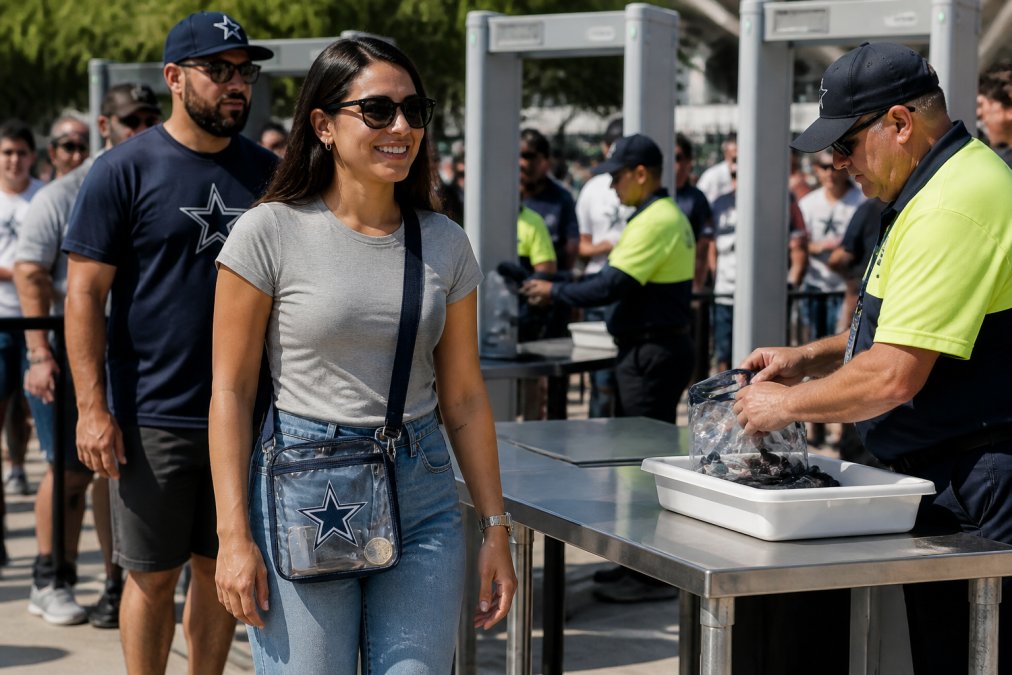
- Faster entry: no unpacking at the checkpoint
- Consistent compliance: one bag that works across most venues
- Less stress: no last-minute decisions at the gate
- Hands-free carry: crossbody and shoulder strap options keep you mobile
The Hidden Costs of Non-Compliance: Returns, Delays, and Discarded Gear
The hidden costs of a non-compliant bag add up fast, and they rarely show up on a receipt. Fans who show up with the wrong bag face three bad outcomes: a longer secondary screening line, a walk back to the car, or abandoning the bag entirely at the gate. That last one stings, a rejected bag often gets discarded along with whatever is inside it.
What a Rejected Bag Actually Costs You
Break the penalty into four buckets:
- Time lost at the gate. A secondary screening line runs several times longer than the standard clear-bag lane. Lose 20 minutes to a bag dispute and you are watching the first series from the concourse.
- The walk back to parking. Most venues do not offer a bag valet, so a round trip to your vehicle can run 15 to 30 minutes, and you pay it twice if you want to re-enter.
- The abandoned contents. Anything you cannot carry in a pocket or a compliant clutch gets left behind or thrown out. Replacing a phone charger, a water bottle, or a rain layer is a real hit nobody budgets for.
- The return shipping trap. Bags bought online without checking size restrictions get shipped back, and the refund rarely covers the hassle. Confirm the venue policy first, then buy a bag built to those limits.
The comparison that matters is not 'clear bag versus free purse' but 'one compliant bag you own versus the recurring risk of a gate rejection.' A single rejected trip, the parking walk, the discarded items, the missed quarter, usually costs more than a durable compliant bag.
The Cheapest-Looking Option Is Often the Most Expensive
Thin promotional clear bags, handed out at events or sold in bulk, fail fast. Seams split, zippers jam, and the vinyl clouds within a season. Replacing a flimsy bag every year quietly costs more than buying one well-made bag once, and it resets your compliance risk every time.
Privacy, Durability, and Multi-Purpose Utility: What Competitors Miss
Three things most clear bag guides skip: privacy, longevity, and everyday use, each the difference between a bag you tolerate and one that earns its place.
Privacy: Compartmentalize, Don't Compromise
Privacy is the real objection. Everyone can see what you carry, and in a packed concourse that visibility feels like an invitation. The practical answer is not to fight the clear bag, it is to layer it.
- Use an opaque clutch for the personal stuff. Most venues allow a small clutch alongside the clear bag, that is where your wallet, medication, and anything you would rather not display should live.
- Choose a bag with an interior opaque pocket or sleeve. Many clear bags include a small solid-fabric pocket or removable insert, which resolves most of the discomfort without violating the visibility rule.
- Pack by visibility tier. Front of the bag: items you are happy to have seen (water bottle, poncho, power bank). Clutch or opaque pocket: everything else.
Durability: Why Cheap Bags Cloud, Crack, and Split
Durability is where cheap bags fail, and the failure modes are predictable:
- Clouding and yellowing. Thin vinyl and low-grade PVC oxidize and turn hazy over time, especially with sun exposure and repeated wiping.
- Seam splitting. Stress points, where the strap meets the body, where the zipper ends, tear first. Reinforced stitching and thicker gauge material at those points are the tell.
- Cold-weather cracking. Stiff plastic gets brittle in low temperatures. A bag that flexes easily at room temperature is less likely to crack on a cold-weather game day.
- Zipper failure. A metal zipper with tight teeth outlasts a plastic one that jams after a few uses. Test that it runs smoothly along its full length, not just the middle.
Multi-Purpose Utility: The Angle That Justifies the Purchase
Multi-purpose utility is the underrated angle, and it turns a single-event purchase into a genuinely useful accessory. Clear bags are not stadium-only, the same rules show up at:
- Concerts and festivals, where many venues now run the same visible-bag screening.
- Airports and transit hubs, where a clear toiletry or personal-item bag speeds up security and keeps liquids visible.
- School and workplace events, where clear-bag policies have spread to gyms, arenas, and campus venues.
- Travel and day trips, where a clear crossbody doubles as a beach or pool bag that does not hide sand or spill risk.
How to Choose a Stadium-Compliant Clear Bag That Lasts
Start with the venue policy, then match the bag to it. Confirm the size limit, the material rule, and whether a small clutch is allowed alongside the clear bag.
Material Thickness, Zipper Quality, and Weather Resistance
Material thickness decides how long the bag lasts. Thicker vinyl and PVC hold their shape, resist tearing at stress points, and stay clear instead of yellowing; thin plastic rarely survives a full season.
- Check the policy first: size, material, and clutch rules
- Prioritize thickness: thicker vinyl and PVC last longer
- Test the zipper: smooth, full-length travel, metal teeth preferred
- Look for weather resistance: reinforced seams and a treated finish
- Confirm the strap: crossbody or shoulder strap for hands-free carry
Essential Game Day Accessories to Pair With Your Clear Bag
A clear bag holds more than you think when you pack it with purpose. The right essential game day accessories keep you comfortable and connected without overloading it.
- Phone case: a team-branded case protects your phone and shows your colors
- Insulated drinkware: keeps drinks cold through the whole game
- Compact power bank: keeps your phone charged for tickets and photos
- Foldable rain poncho: small enough to fit, useful when weather turns
- Team towel or rally item: light, visible, and easy to carry
Conclusion
A stadium clear bag earns its place when you attend regularly, because it turns a stressful gate experience into a predictable one. The decision comes down to three things: material thickness, zipper quality, and whether the bag works beyond game day. Fans who check the venue policy first and buy a bag built to those limits rarely regret it. SOK Sports stocks officially licensed drinkware, phone cases, and accessories that fit a compliant clear bag and keep your team colors on display from the parking lot to the final whistle.
Frequently Asked Questions
Do you need a clear bag for stadiums?
Most NFL, NBA, MLB, NHL, and NCAA venues now require clear bags for entry. Policies vary by venue, but the standard rule is a clear plastic bag no larger than 12 x 6 x 12 inches, or a small clutch roughly the size of a hand. Check your specific venue's policy before game day, because enforcement and size limits differ. A clear bag that meets the common standard keeps you from being turned away at the gate.
What is the best clear bag for a stadium trip?
The best clear bag for a stadium trip balances size compliance, durability, and hands-free carry. Look for a crossbody or shoulder strap style made from thick clear plastic with a quality zipper and reinforced seams. A bag that meets typical size restrictions while offering compartmentalization for your wallet, phone, and keys works for most venues. Weather-resistant material helps if you attend outdoor games in rain or snow.
What are the drawbacks of clear backpacks?
Clear backpacks offer hands-free convenience but have real drawbacks. Privacy is the biggest concern, since everyone can see your phone, wallet, and personal items. Many venues also cap bag size, so a full-size clear backpack may exceed the allowed dimensions. Material thickness matters too: thin plastic can crack or yellow over time, and cheap zippers fail under regular use. A smaller clear crossbody or tote often works better for stadium entry.
How do I choose a stadium-compliant bag size?
Start by checking your venue's published bag policy, since size restrictions vary. The most common standard is a clear bag no larger than 12 x 6 x 12 inches, with a small clutch allowed in addition. Measure your bag against those dimensions before buying. If you attend multiple venues, choose a bag that meets the strictest policy you expect to encounter. A slightly smaller bag is safer than one that might be rejected at the gate.