


How to Display NFL Collectibles in Your Office
Quick Summary
To display NFL collectibles in an office, pick a spot you see daily that gets little direct sunlight, then match a closed case or frame to each item's size and fragility. Protect pieces from UV light, humidity and handling, and rotate items so the display stays fresh.
- Choose a wall or shelf you can see from your desk, away from windows and heaters.
- Use a closed case with a stable base for signed footballs and helmets.
- Top-loaders inside a frame with UV-filtering front keep trading cards bright.
- Give items at least an inch of clearance on each side inside the case.
- Handle signed pieces by the edges with clean, dry hands or cotton gloves.
Table of Contents
- Start With the Right Spot for Your Display
- Sports Memorabilia Display Ideas for Different Items
- Football Card Display Ideas for Small Collections
- Choosing a Sports Collectibles Display Case
- Small Office Sports Decor Without Clutter
- Protecting Your NFL Collectibles From Light and Dust
- Mount Your First Display Piece This Week
- Frequently Asked Questions
How to Display NFL Collectibles in Your Office
Last Updated: October 31, 2026
Many fans build serious collections of team gear, and the office is often where those pieces matter most. Learning to display NFL collectibles well means picking the right spot, the right case, and the right protection from the start. This guide walks through each step so your display looks good and lasts.
Start With the Right Spot for Your Display
The best spot for NFL collectibles is a place you see every day but that gets little direct sunlight. A display that catches your eye during calls and meetings keeps your collection in view without wearing it down.
Corner and Eye-Level Placement
Corners work well because they show more pieces in less wall space. Eye-level shelves draw attention without forcing you to look up or down. Place your most valuable pieces at eye level and lighter items higher or lower.
- Pick a wall you can see from your desk
- Keep items away from windows and heaters
- Leave room to add pieces later
Sports Memorabilia Display Ideas for Different Items
Each type of item needs its own approach. A football, a helmet, and a signed card all have different weight, size, and fragility. Match the display to the object.
Displaying Footballs and Helmets
Footballs and helmets need sturdy support. A floor-standing display or a wall-mounted holder keeps them secure. A glass case keeps signatures clean and protected.
Framing Jerseys and Trading Cards
Trading cards do well in top-loaders set inside a frame. Keep cards out of direct light so the colors stay bright over time.
Football Card Display Ideas for Small Collections
A small collection does not need a large case. A narrow shelf, a few card holders, or a single framed display can show off your best cards. Rotate cards every few months so the display stays fresh and you can enjoy the rest of your collection.
- Use a shadow box for one standout card
- Try a small acrylic stand for rookie cards
- Group cards by team or season for a clean look
Choosing a Sports Collectibles Display Case
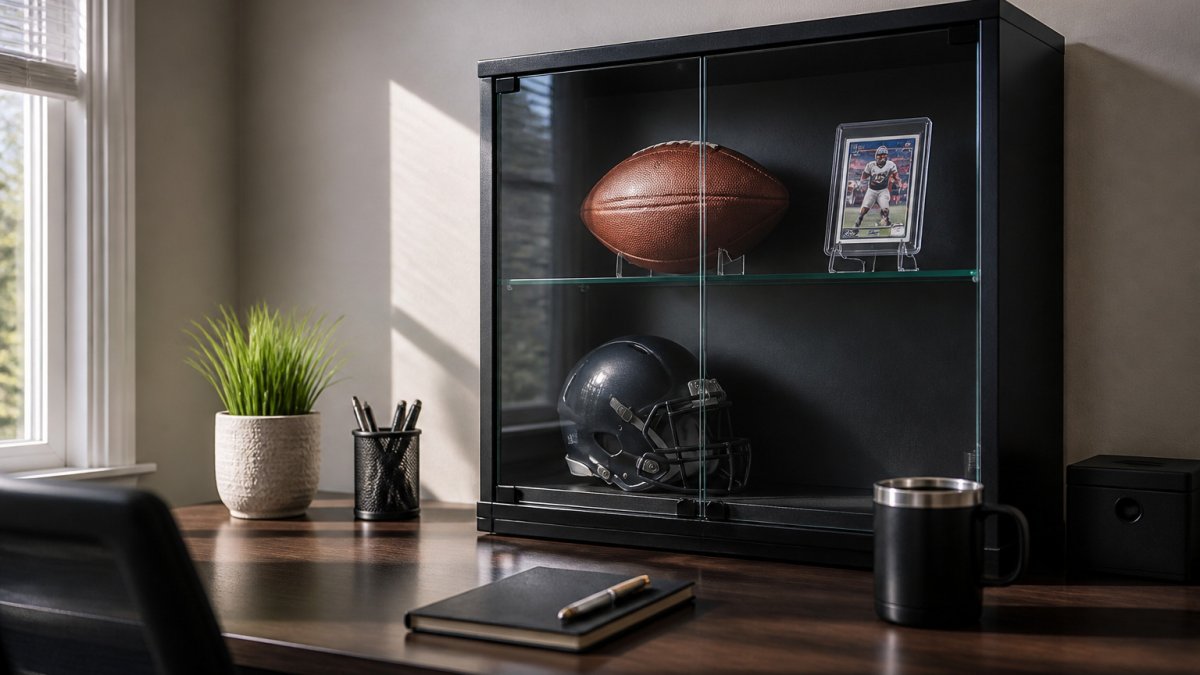
A good case protects your items from dust, handling, and damage, but not every case suits every collectible. Use the criteria below to compare options before you buy, and match the case to the item's weight, size, and fragility.
Compare Cases by These Criteria
- Material: Acrylic is lighter and less likely to shatter; glass resists scratching better and looks clearer over time. Both block dust when the case is closed.
- UV protection: Look for UV-filtering acrylic or glass if the display sits anywhere near a window. Standard clear materials do not block the UV that fades cards and printed items.
- Capacity and clearance: Measure the item at its widest and tallest points, then add at least an inch of clearance on each side so nothing gets crowded and air can move.
- Access: A front-opening or magnetic-front case lets you add or swap pieces without moving the whole display. A case you have to disassemble to open will discourage rotation.
- Security: A lock or tamper-resistant latch matters in a shared office. For a private office, a simple latch is usually enough.
- Mounting: Wall cases need a back panel sturdy enough for the item's weight plus the case. Freestanding and shelf-top cases avoid wall damage and suit renters.
Match the Case to the Item
- Signed footballs and helmets: Use a closed case with a stable base or cradle so the item does not roll or tip. A glass front keeps signatures clean and viewable.
- Trading cards: Top-loaders inside a frame or a card-specific case with UV-filtering front keep corners sharp and colors bright. Avoid cases that press directly on the card face.
- Three-dimensional items (mini helmets, pennants, ticket stubs): A shadow box with depth gives clearance and keeps small pieces from shifting.
- Drinkware and desk accessories: Open shelving or a shallow tray keeps everyday items accessible while still looking intentional.
Budget and Product-Selection Guidance
Display types differ mainly in material, capacity, and protection level rather than in any single feature. As a rule of thumb, shelf-top acrylic cases are the most economical entry point, wall-mounted cases cost more because of mounting hardware and larger panels, and UV-filtering or locking cases sit at the top of the range. Compare cases by protection level per item rather than by sticker price alone: a case that fits several cards or a helmet safely often costs less over time than replacing damaged pieces. Similar principles of preservation apply when displaying challenge coins, where the balance between visibility and security remains the primary concern for any serious collector.
Small Office Sports Decor Without Clutter
A small office can feel crowded fast. Keep your display to one wall or one shelf, and let the items breathe. Mix one large piece with a few smaller ones so the space feels balanced rather than packed.
Wall art can add team color without taking up desk space. Choose a few pieces that match your team's colors and keep the rest of the room simple.
Protecting Your NFL Collectibles From Light and Dust
Most damage to collectibles is cumulative and invisible until it is too late. Light, humidity, temperature swings, and dust all work slowly, so build protection into the display from day one rather than correcting it later.
Light and UV
Sunlight fades cards, printed items, and signatures over time, and ordinary window glass does not stop the UV that causes it. Keep displays out of direct sun and away from heat sources. If a display must sit near a window, use UV-filtering acrylic or glass in the case or frame, and rotate items so no single piece takes the full exposure.
Humidity and Temperature
Paper and cardboard collectibles, signed items, and leather goods all respond to moisture and heat. Keep the display away from heaters, radiators, and exterior walls that sweat in humid months. A stable indoor room is usually enough; avoid attics, garages, and basements for valuable pieces. If your office runs humid, a small rechargeable dehumidifier in the display area helps more than opening windows.
Dust and Safe Materials
A closed case or frame blocks most dust and reduces how often you need to clean. Dust the outside of cases regularly with a soft, dry microfiber cloth. Avoid spraying cleaner near the items themselves, and never spray directly onto acrylic or glass that sits over paper or fabric. For open shelves, a lint-free cover or a shallow tray keeps dust off small pieces.
Handling
Handle items by the edges and wear clean, dry hands or cotton gloves when moving signed pieces. Oils from skin transfer to signatures and card faces and are difficult to remove without damage (General Preservation - FAQ).
Mount Your First Display Piece This Week
Start with one item. Pick your spot, choose a case or frame that fits, and mount it securely. Once that first piece is in place, add more over the next few weeks as your collection grows.
Browse the SOK Sports website for team gear and accessories to build your office display one piece at a time.
Frequently Asked Questions
How do you display sports memorabilia in an office?
Start by choosing one visible wall or shelf that does not compete with your monitor or window light. Group items by type, such as footballs together and cards together, and mount heavier pieces like helmets on a sturdy wall bracket or floor stand. Keep the layout to a few clear focal points rather than covering every surface. Protect signed or valuable items behind a closed front so they are shielded from dust and handling, and rotate pieces occasionally so the display stays fresh.
What is the best way to display football cards?
Football cards look best in sealed protective holders mounted in a shadow box or a closed display case. Arrange them in rows by team, season, or player so the collection reads as a set. Place the case at eye level where you can see it while working, and keep it out of direct sunlight, which can fade card printing over time. For a small collection, a slim wall-mounted frame with a few top cards works well without taking up desk space.
How do you keep collectibles from looking cluttered in a small office?
Limit the display to one zone, such as a single shelf or a corner wall, and leave the surrounding space open. Use matching case styles and a consistent frame color so the pieces look intentional. Choose a few high-value or favorite items instead of everything you own, and store the rest in labeled archival boxes that you can rotate in later. Clear space around each piece makes it easier to notice.
How do you display a football in an office?
A football is usually displayed in a closed display case on a stand or a wall-mounted cradle. Choose a case sized to the ball with a little room for the stand, so the ball does not press against the glass. Keep it away from windows and heaters, and dust the case regularly rather than opening it often, which reduces handling wear on the leather.
