


Best Portable Heaters for Outdoor Games: 2026 Guide
Table of Contents
- What to Look for in Portable Heaters for Outdoor Games
- Propane vs. Electric: Which Type Works Best
- Top Picks for Tailgating and Stadium Seating
- How to Stay Warm at Outdoor Sporting Events
- Safe Propane Heaters for Outdoor Use: Rules and Tips
- Maintenance and Storage Tips
- Conclusion
- Frequently Asked Questions
Last Updated: September 12, 2026
What to Look for in Portable Heaters for Outdoor Games
The best portable heaters for outdoor games balance heat output, safety, and easy transport, and the right pick depends on whether you tailgate from a truck bed or sit in stadium seats. This guide breaks down BTU ratings, fuel types, and safety features so fans can stay warm from kickoff to the final whistle.
Cold-weather fandom is a real commitment. When temperatures drop, the difference between a great game day and a miserable one often comes down to preparation. Below, we'll show you exactly how to match a portable heating solution to your setup, and the details covered have kept plenty of fans comfortable through late-season playoff runs.
But first, here's what most guides get wrong: they treat all outdoor heaters as interchangeable. In practice, a unit that works on an open patio may fail in a stadium seat, and a heater that's perfect for a tailgate may be too bulky to carry through a gate.
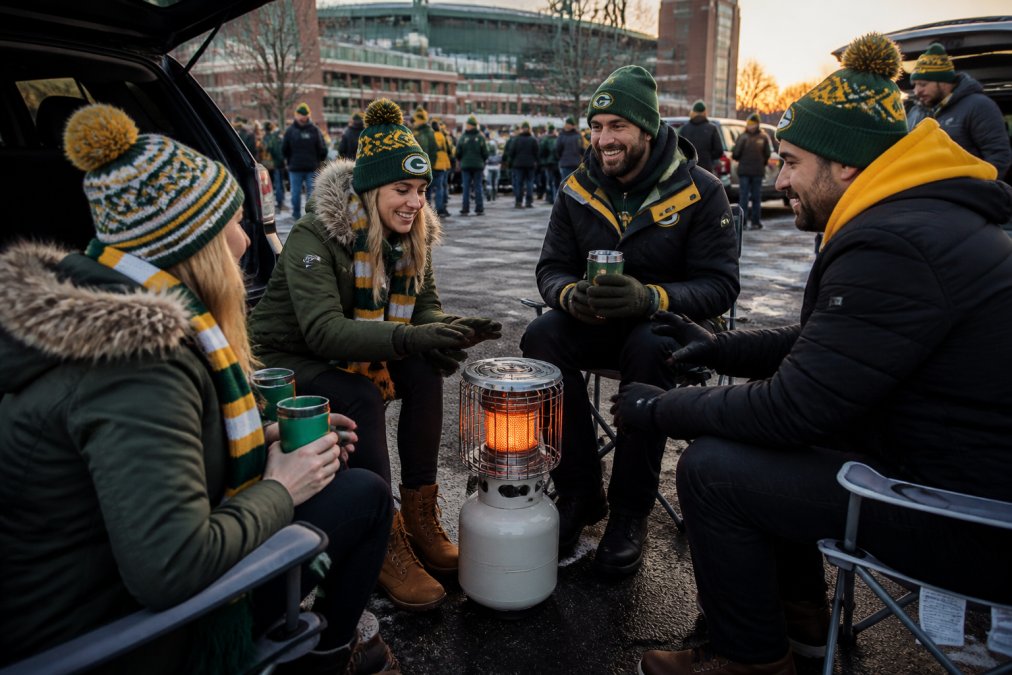
BTU Output and Heating Radius
BTU output is the primary measure of a heater's heating capacity, and it directly determines how large an area the unit can warm. A heater with a higher BTU rating throws more heat, but it also burns fuel faster and typically weighs more. For tailgating setups, a mid-range output usually covers a small circle of fans. For personal stadium seating, a lower-output directional unit is often the smarter choice because it concentrates warmth on one person rather than trying to heat open air.
Safety Certifications and Features
Safety features matter more than raw power when you're packed into a crowd. Look for automatic shut-off, tip-over protection, and an oxygen depletion sensor on any combustion-based unit. These features cut the risk of accidents in tight spaces. A weather-resistant housing and stable base also help when the ground is uneven or the wind picks up.
Propane vs. Electric: Which Type Works Best
Propane heaters win on raw heat output and runtime, while electric and battery-powered options win on safety and convenience in enclosed or crowded settings. The right choice comes down to where you'll use it, how you'll power it, and whether the venue even allows it.
Propane Heaters: Power and Portability
Propane models deliver strong radiant heat and run for hours on a standard 1-pound canister, making them a favorite for tailgates where no outlet is available. Tank-top and radiant styles commonly fall in the 3,000 to 18,000 BTU range, and a 1-pound canister typically fuels a mid-output unit for roughly two to six hours depending on the setting (energy.gov). The trade-off is weight and ventilation. A full 1-pound canister adds about a pound and a half, and combustion produces exhaust, so these units belong outdoors or in well-ventilated areas only. Piezo ignition and adjustable heat settings make them user-friendly, and many feature a compact design that fits in a trunk.
One thing most guides skip: many public sports venues restrict open-flame and fuel-based devices entirely, and some ban propane canisters at the gate regardless of size. That single rule can eliminate an entire category of heaters before you ever compare BTU ratings, so check the venue's prohibited-items list before you shop.
Electric and Battery-Powered Options
Electric heaters are lighter and produce no combustion exhaust, which makes them the safer pick for stadium seating and enclosed spaces. The catch is power. A corded unit needs an outlet, which most stadium seats don't offer, so battery-powered models have become the practical choice for fans who want warmth without a cord. Runtime depends on battery capacity, and thermal output is generally lower than propane, often in the 200 to 1,500 watt range for personal units, but for directional comfort in a seat, that's usually enough.
Battery chemistry matters more than most buyers realize. Lithium-ion packs hold output steadier in cold temperatures than older nickel-based cells, and a pack rated for a few hours at room temperature may deliver noticeably less in freezing conditions (energy.gov). If you plan to sit through a full game in cold weather, look for a unit with a swappable battery so you can carry a spare.
| Feature | Propane | Battery-Powered Electric |
|---|---|---|
| Heat output | High (radiant heat), often 3,000-18,000 BTU | Moderate (directional), often 200-1,500 watts |
| Runtime | Roughly 2-6 hours per 1-lb canister | Varies by battery; cold reduces runtime |
| Portability | Heavier, needs fuel | Light, no fuel |
| Best for | Tailgating, open air | Stadium seating |
| Ventilation | Required | Not required |
| Venue rules | Frequently restricted or banned | More often permitted |
The Stadium Rule Most Buyers Learn Too Late
Here's the angle most heater guides miss entirely: the deciding factor for in-seat use usually isn't BTU output, it's whether the venue permits the device at all. Open-flame and fuel-based heaters are commonly restricted in public seating areas, while sealed battery-powered units are more often allowed. That means the "best" heater for a tailgate and the "best" heater for a bleacher seat are frequently two different products, and buying one unit to do both jobs often ends in a heater that stays in the truck.
A practical pattern many seasoned fans follow: keep the propane unit at the tailgate for the pre-game, and carry a compact battery-powered heater to the seat. That split setup sidesteps the venue rule entirely and keeps weight out of your stadium bag.
Top Picks for Tailgating and Stadium Seating
For tailgating, a mid-size propane unit with tip-over protection and a sturdy base is the most reliable choice. For stadium seating, a compact battery-powered or low-output radiant heater that fits under a seat is far more practical. Match the unit to your environment before you buy.
Tailgate Setup: What Actually Works in a Parking Lot
A tailgate heater has to do three things: throw heat across an open circle of people, survive wind, and run long enough to cover the pre-game. That points toward a mid-output propane unit, often in the 8,000 to 18,000 BTU range, with a wide radiant face rather than a narrow beam. A unit with a built-in tip-over switch and an oxygen depletion sensor is the baseline, not a bonus, because parking lots are uneven and crowds move around the heat source.
Wind is the quiet killer of tailgate heat. Radiant heaters warm people directly rather than the air, so they hold up better in a breeze than convective units that try to heat open air. Position the unit so its face points at the group, not at the open lot, and keep it on a stable, level surface away from tents and vehicle fuel.
Stadium Seating: The Constraints Nobody Talks About
Bleacher and stadium seating imposes limits that patio and camping guides never address:
- Space. Seats are narrow and footwells are shared. A heater has to fit under a seat or on a lap without blocking aisles or tripping other fans.
- Venue rules. Many venues restrict open-flame and fuel-based devices in seating areas, and some prohibit outside heating devices altogether. Battery-powered units are more often permitted, but policies vary by venue and event.
- Noise and smell. A combustion unit in a packed row is a non-starter for most fans. Sealed electric units are quiet and odorless.
- Transport. Whatever you carry has to survive a walk from the parking lot, a bag check, and a squeeze down a row. Weight and footprint matter more here than anywhere else.
A compact battery-powered heater that fits in a tote or under a seat checks all four boxes. Lower output is fine in this setting because you're warming one person in a sheltered row, not an open parking lot.
A Simple Decision Framework
| Your setup | Priority | What to look for |
|---|---|---|
| Open-air tailgate | Heat output and wind resistance | Mid-output radiant propane, tip-over switch, stable base |
| Bleacher or stadium seat | Portability and venue compliance | Compact battery-powered unit, quiet, fits under seat |
| Both (same day) | Split setup | Propane at the tailgate, battery unit in the bag |
A common mistake is buying the biggest heater available and discovering it's too heavy to carry or too hot for a crowded row. The best portable heating solution for a stadium is quiet, compact, and safe to operate in close quarters. For tailgates, prioritize heat output and runtime.
Pair the Heater With the Rest of Your Cold-Weather Kit
A heater is one layer of a game-day warmth plan, not the whole plan. The fans who stay comfortable deep into the fourth quarter usually combine three things: a heater matched to their setting, insulating gear that traps body heat, and a hot drink that warms from the inside. A vacuum-insulated tumbler or travel mug keeps coffee or cocoa hot for hours in freezing air, and an insulated seat cushion blocks the cold that radiates up through bleacher seats, often the single biggest comfort upgrade for a stadium seat.
SOK Sports carries team-branded drinkware and fan accessories that pair well with a cold-weather game-day setup, so fans can stay comfortable and show their colors at the same time.
How to Stay Warm at Outdoor Sporting Events
Layering is the foundation of staying warm at outdoor sporting events, and a heater is a supplement, not a replacement for proper cold weather gear. Start with a moisture-wicking base layer, add an insulating mid-layer, and finish with a windproof and water-resistant outer shell. Bring a hat, gloves, and a stadium blanket, since most body heat escapes through the head and extremities.
A few practical moves make a bigger difference than any single piece of gear:
- Wear a thermal base layer against your skin
- Add an insulated mid-layer for warmth retention
- Top with a wind-resistant outer layer
- Pack a hat, gloves, and hand warmers
- Bring a blanket for your legs and feet
- Position your heater to warm your core, not the open air
Seat cushions that insulate against cold bleachers and a thermos of a hot drink round out a smart cold-weather kit. Fans who plan ahead stay comfortable well into the fourth quarter.
Safe Propane Heaters for Outdoor Use: Rules and Tips
Safe propane heaters for outdoor use require ventilation, a stable placement, and attention to the manufacturer's instructions. Never operate a propane heater in a fully enclosed space, and always keep it away from flammable materials. Check that the unit has an oxygen depletion sensor and automatic shut-off before you rely on it.
Stadium policies vary, so check the venue's rules on outside heating devices before game day. Some venues restrict open-flame or fuel-based devices entirely, which is why battery-powered options are often the safer bet for in-seat use. When in doubt, leave the propane unit at the tailgate and bring a battery-powered heater to your seat.
Maintenance and Storage Tips
Proper maintenance keeps a portable heater running safely season after season. Inspect the ignition system and fuel connections before each use, and clean the unit according to the manufacturer's guidance. Store propane canisters upright in a cool, dry place away from living areas, and remove batteries from electric units during the off-season to prevent corrosion.
Keep the unit clean and dry, and replace any worn parts before the next season. A little upkeep now prevents a mid-season failure when you need warmth most.
Conclusion
Cold game days test even the most dedicated fan, and the right portable heater makes the difference between toughing it out and actually enjoying the game. Match the unit to your setting, prioritize safety features, and layer your cold weather gear for the best results. SOK Sports offers officially licensed team merchandise, drinkware, and fan accessories to complete your game-day setup, so you can rep your team all season.
Frequently Asked Questions
What is the best portable heater for outdoor use?
The best portable heater depends on your power source. Propane models offer high BTU output and work anywhere, while electric and battery-powered heaters are quieter and easier to use near seating. For outdoor games, look for a unit with at least 4,000 BTUs, tip-over protection, and an automatic shut-off. Propane canisters are common for tailgating, but battery-powered options are growing for stadium use where open flames are restricted.
Can you use propane heaters in open-air stadiums?
Many open-air stadiums allow small propane heaters in tailgating areas but prohibit them inside seating sections due to fire codes and safety regulations. Always check the venue's policy before bringing any portable heater. For inside the stadium, battery-powered or electric hand warmers are often the only approved option. Safe propane heaters for outdoor use should always have an oxygen depletion sensor and tip-over protection.
How do I choose the right BTU output for an outdoor heater?
BTU output determines how much area a heater can warm. For personal use at a game, 4,000 to 9,000 BTUs is sufficient for a small group. For larger tailgates, 10,000 to 18,000 BTUs works better. Consider wind and temperature: colder, windier conditions require higher BTU. A heater with adjustable heat settings lets you match output to conditions. Always follow the manufacturer's guidelines for clearance and ventilation.
Do battery-operated portable heaters exist for outdoor sports?
Yes, battery-operated heaters exist but typically produce less heat than propane or plug-in electric models. They are best for personal warmth, such as heated seat cushions or hand warmers. For extended outdoor games, a battery-powered heater can supplement layered clothing but may not keep a group warm. Look for models with long runtime and USB-C charging if you need portability without fuel.